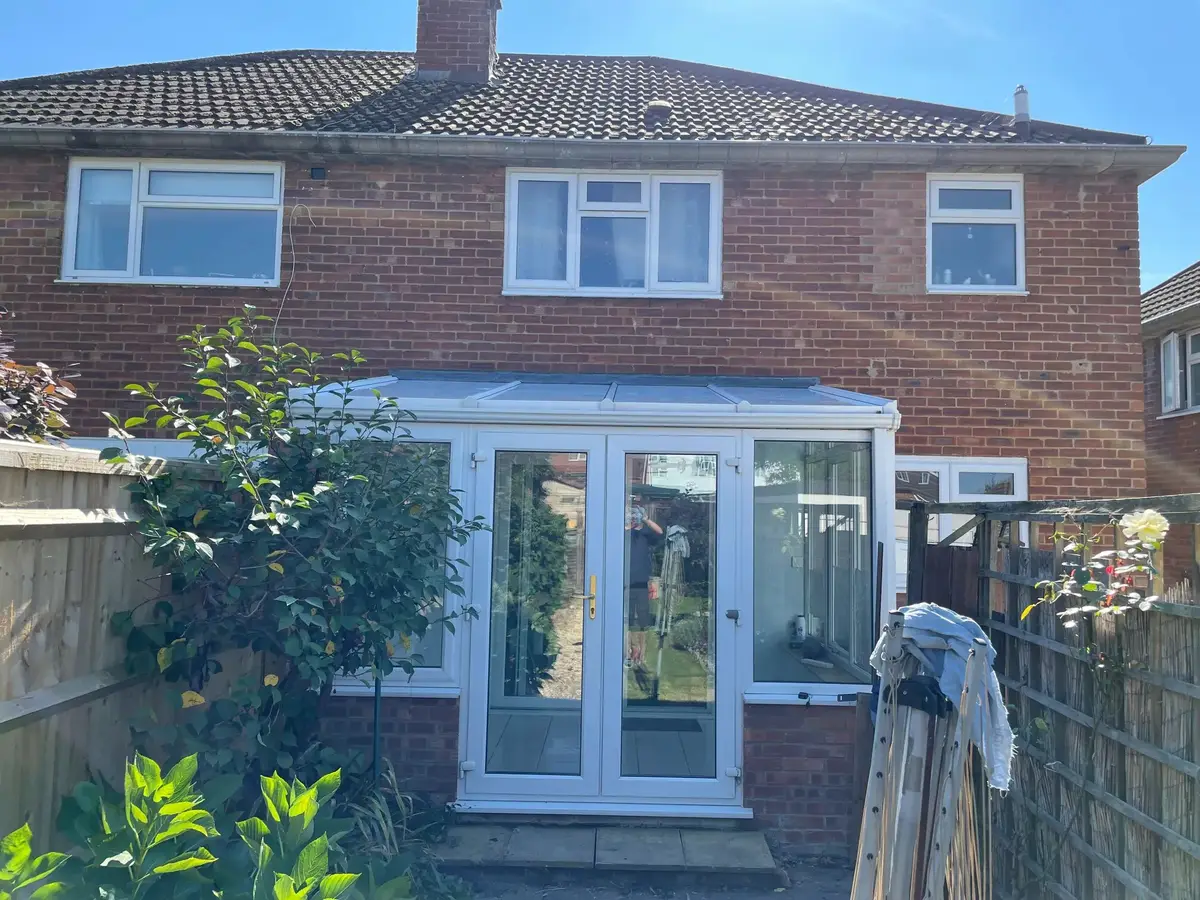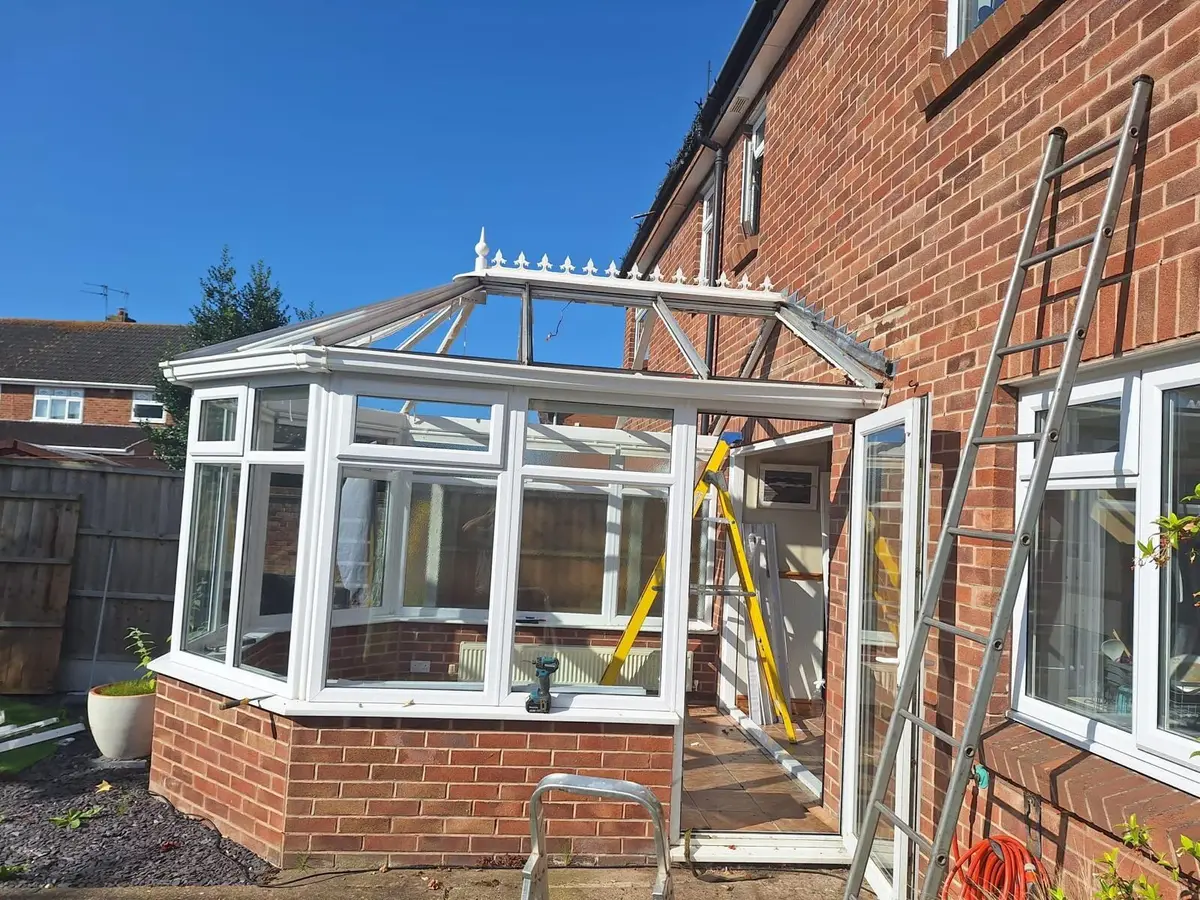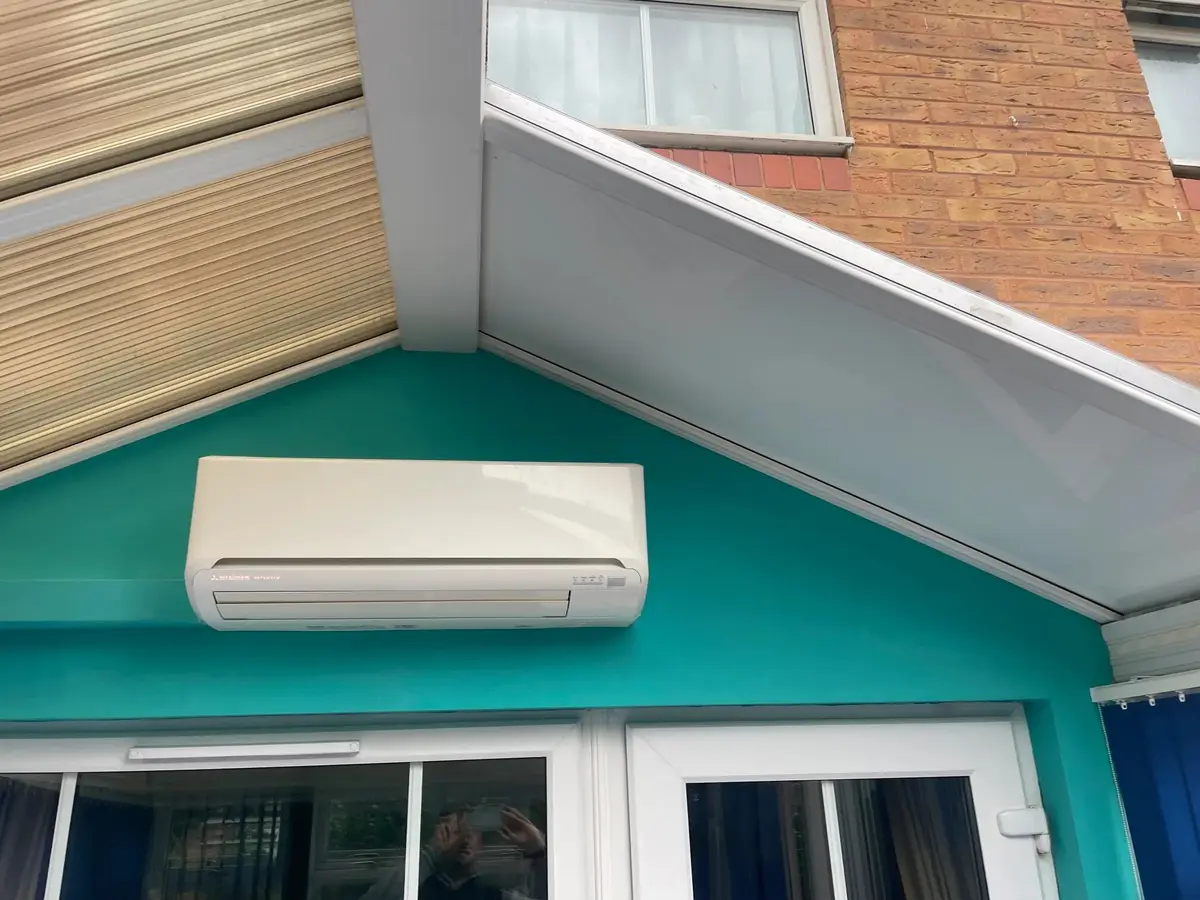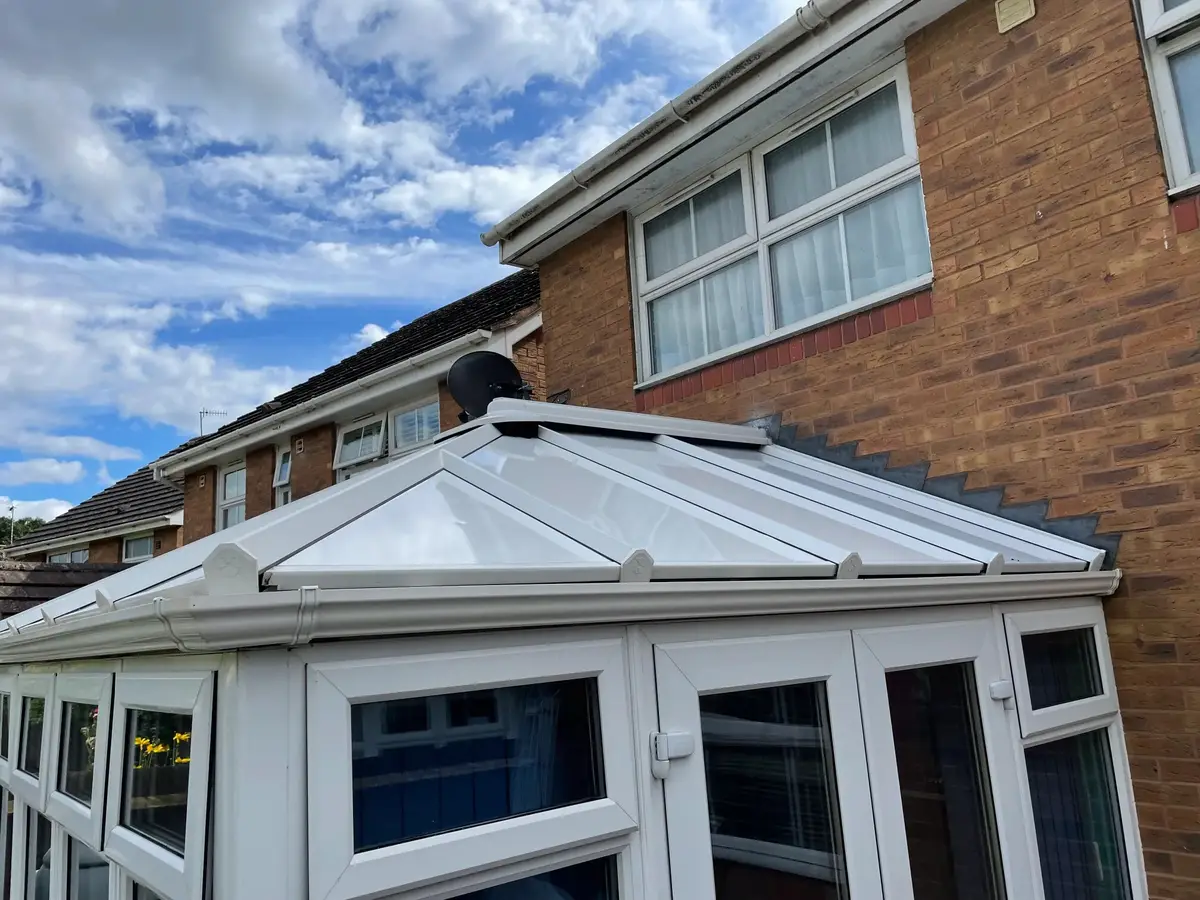
Deal with the roof first, because that is where most of the heat gets in. Conservatories with polycarbonate or glass roofs regularly pass 35 to 40°C on sunny days. Open vents high and low, shade outside the glass where you can, and use a fan rather than a portable air conditioner. The lasting fix is an insulated panel roof, which stops direct sun coming through the roof at all.
Why the conservatory gets so hot
In June the midday sun in the UK is high in the sky, so it shines almost straight down onto the roof rather than onto the walls. On a clear day that can mean roughly 800 W of sunlight landing on every square metre of roof. A 12 m² roof is catching something like 9,600 W at the peak.
Even if a tinted polycarbonate or glass roof only lets half of that through, the room is gaining the heat of two or three fan heaters on full, for hours. The sunlight hits the floor and furniture, turns into heat, and that heat cannot get back out through the glass as easily as it came in. Windows and doors are rarely open wide enough to shift it.
Direction matters. South and west facing conservatories suffer most, with west facing rooms often at their worst between 3pm and 7pm. East facing rooms get hot in the morning and cool down by lunch. North facing rooms rarely overheat badly, though a polycarbonate roof can still get uncomfortable in a heatwave.
Free things to do today
- Open up early. Open the roof vent and windows before the sun reaches the roof, not after the room is already at 30°C. It is far easier to keep heat out than to remove it.
- Vent high and low. Hot air rises. A roof vent or high window lets it out, and a low window or door on the opposite side lets cooler air in to replace it. That flow does much more than one open window.
- Close the door to the house. On hot afternoons, shut the door between the conservatory and the house so the heat does not spread into the rest of the home.
- Shut it at dusk only if it is cooler inside. On warm nights, keep vents open overnight (where security allows) so the room starts the next day cooler.
- Move things out of the sun. Dark rugs, cushions and stone floors store heat and give it back for hours. Lighter colours help a little.
Fixes that cost money, ranked honestly
| Fix | Cost level | How much it helps | Catch |
|---|---|---|---|
| Electric fan | Low | Feels cooler, does not lower the air temperature | Only helps while you are sitting in front of it |
| Roof blinds inside | Medium | Cuts glare well, reduces heat a little | The heat is already inside the glass, so the air still warms up |
| Reflective film on a glass roof | Medium | Reflects part of the sunlight | Darkens the room, can void some glass guarantees |
| Opal or heat reflective polycarbonate | Medium to high | Better than clear sheets | Still lets solar heat in, poor in winter |
| Portable air conditioner | Medium plus running costs | Can hold the room a few degrees cooler | Noisy, needs a hose out of a window, struggles against a glass roof |
| Insulated panel roof | From £3,000 fitted | Stops direct sun on the roof completely | Room is darker |
Running costs: fan versus air conditioner
At the Ofgem price cap for 1 October to 31 December 2026, electricity costs 26.32p per kWh. A typical 40 W pedestal fan running for 8 hours uses 0.32 kWh, about 8p a day. A portable air conditioner drawing around 1 kW for 6 hours uses about 6 kWh, roughly £1.58 a day.
That £1.58 buys less than you would hope. A portable unit is fighting several kilowatts of sun coming through the roof, and single hose models pull warm air in from outside to replace what they blow out. In a glass or polycarbonate conservatory on a bright afternoon, most will take the edge off rather than make it cool.
Why internal blinds are not enough
Blinds under the roof are popular, and they do cut glare. The trouble is where the heat ends up. Sunlight passes through the roof, hits the blind and warms it, and the blind then warms the air in the room. You feel less direct sun on your skin, but the thermometer still climbs.
Shading works best on the outside of the glass, where the heat stays outside. That is difficult on a conservatory roof, which is why people end up changing the roof itself.
The fix that works: an opaque insulated roof
An insulated panel roof replaces the polycarbonate or glass with two aluminium skins bonded to a 75 mm solid foam core. No direct sun comes through it. The outer skin gets hot on a sunny day, but the foam stops that heat reaching the inside, and the white inner skin stays close to room temperature.
The glazed walls stay as they are, so you will still get sun through them, mostly in the morning or evening when the sun is lower. Wall blinds deal with that well because the angle is easier. If you fit roof lights, which most people do to keep daylight, they let some sun in, but over a small fraction of the roof area rather than all of it.
The same roof also keeps heat in during winter. A 12 m² roof in 16 mm polycarbonate loses about 552 W on a 0°C night with 20°C inside; in panels it is about 103 W. See how to keep a conservatory warm in winter.
What it costs
Small roofs up to 12 m² start from £3,000 fitted, medium roofs of 12 to 25 m² from £4,000, and large or P-shaped roofs from £5,000. The price includes removing the old roof, panels in your colour, fitting and a 10 year insurance backed guarantee. Most homes pay £3,000 to £7,500. A small lean-to or Edwardian roof is usually fitted in 1 day.
For a figure based on your roof, use the conservatory roof cost calculator.
A hot day plan if you are keeping the old roof
- Before 9am: open the roof vent and a low window on the far side.
- Mid morning: close internal roof blinds fully on the sunny side.
- Midday to late afternoon: shut the door to the house, run a fan where you sit.
- Evening: open everything up as soon as it is cooler outside than in.
That will make a polycarbonate conservatory bearable on most days. On the hottest days of the year, it will still be too hot to use.
Next step
If the room has been out of action every summer, get a free survey and fixed quote for a panel roof. We check the frame, measure up and give you a written price.
Questions people ask
What can I put on my conservatory roof to stop the sun?
Outside shading is hard to fit on a conservatory roof. Reflective film on glass helps a little. Replacing the roof with insulated panels stops direct sun through the roof completely.
How hot does a conservatory get in summer?
Conservatories with polycarbonate or glass roofs regularly pass 35 to 40°C on sunny days, especially if they face south or west.
Will roof lights make a panel roof hot again?
Much less than the old roof. One or two roof lights cover a small part of the roof, while the rest is opaque and insulated.
Does a fan actually cool a conservatory?
It makes you feel cooler by moving air over your skin, but it does not lower the room temperature. It costs about 8p a day to run.