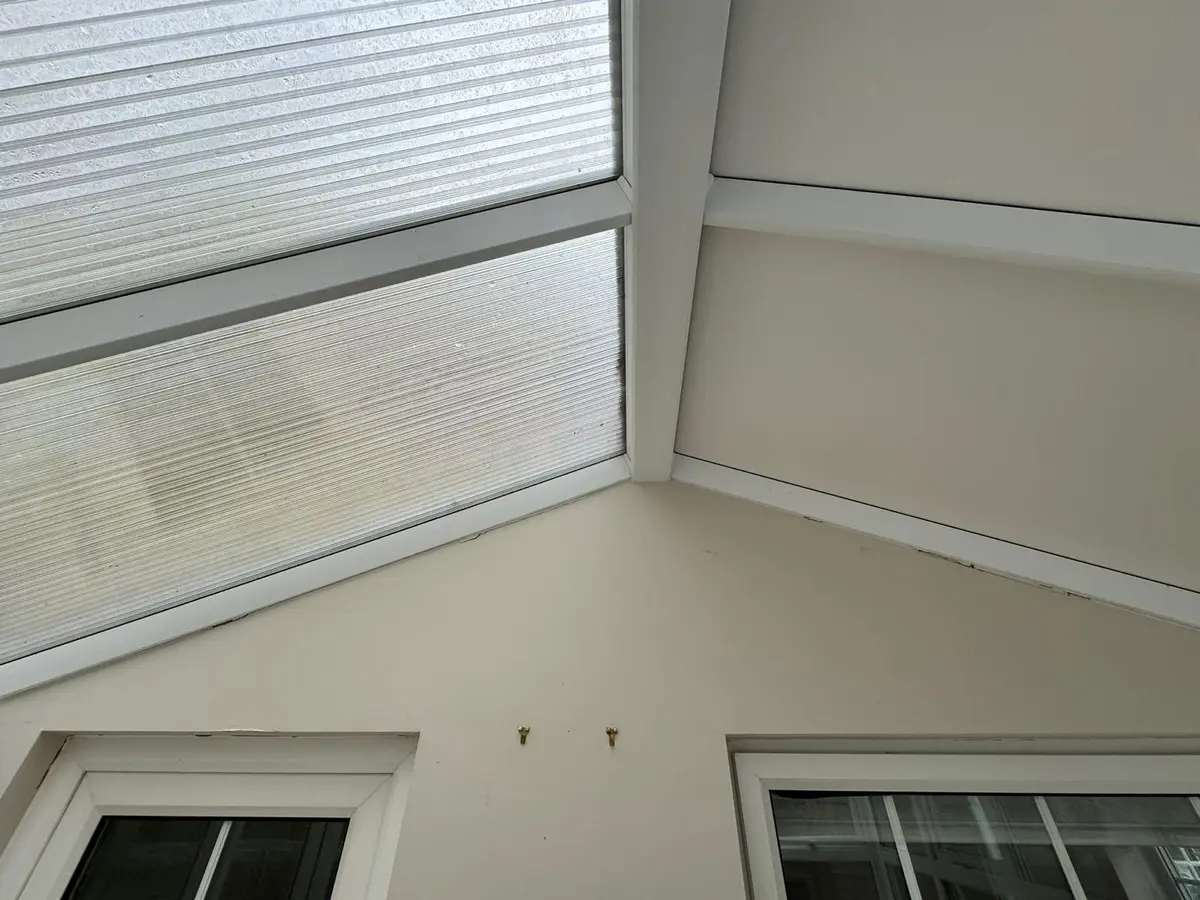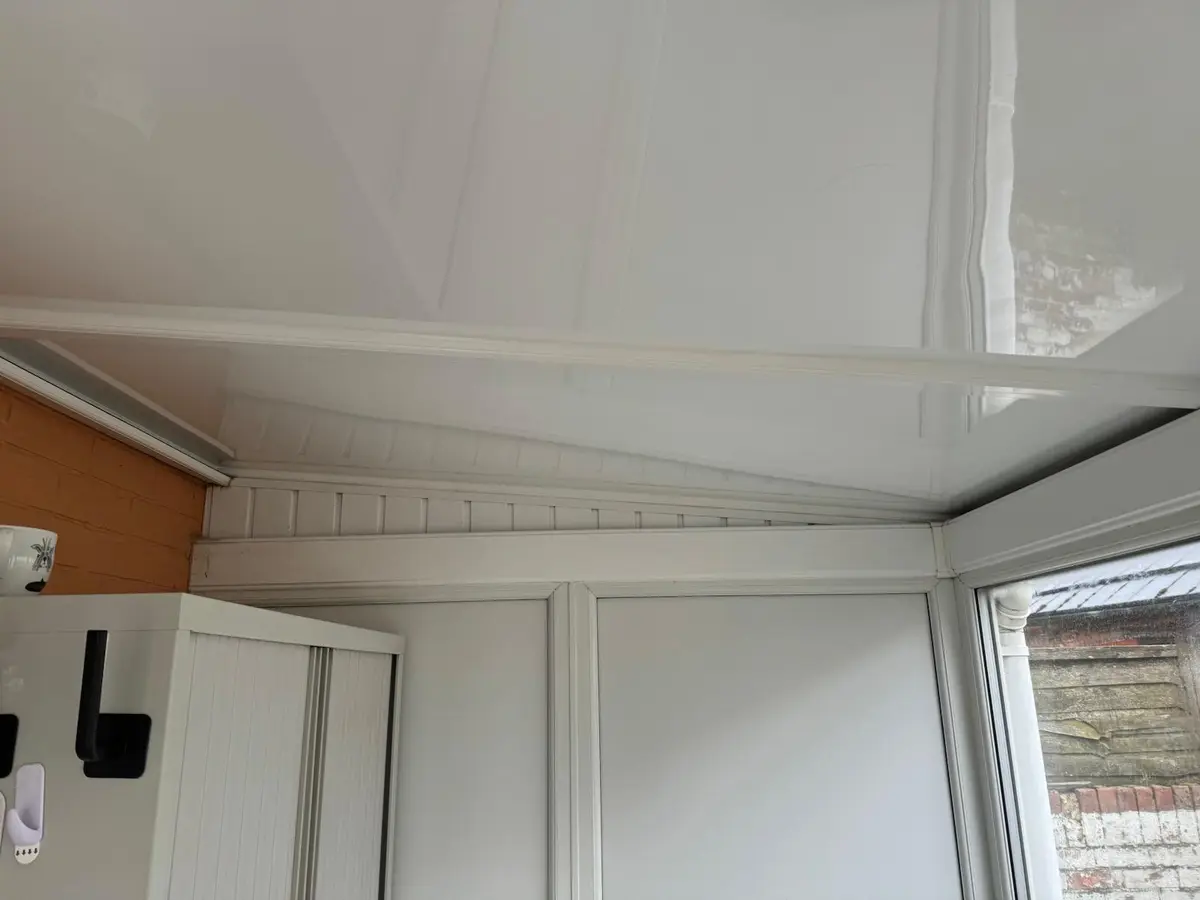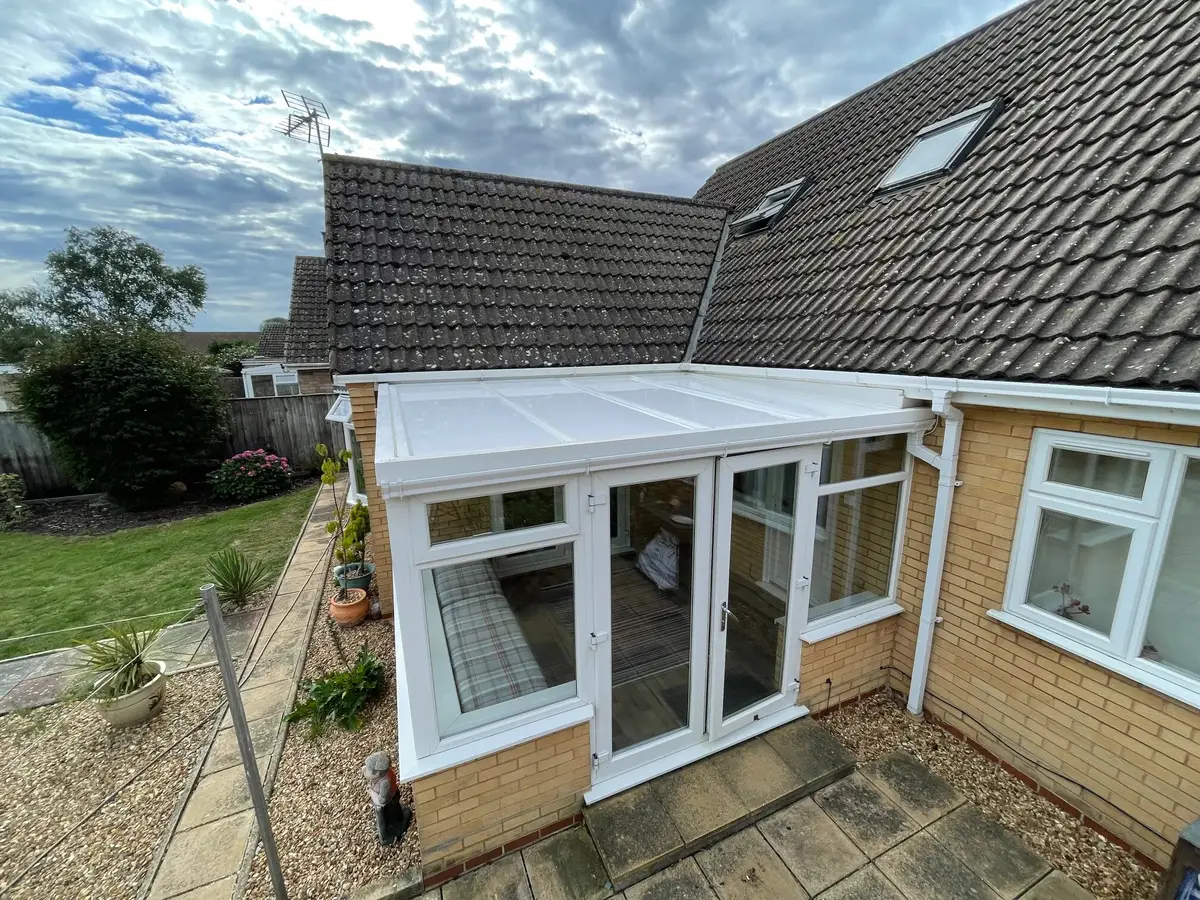
Insulated roof panels usually cost half or less of a lightweight tiled conservatory roof. For a medium Edwardian of about 17 m², panels are typically £4,200 to £4,950 fitted, while a tiled roof is £10,050 to £14,750, so most homeowners keep £5,000 to £10,000. Panels also go on in one or two days instead of three to five, and they keep the frame you already have.
Work out your own saving
Drag the slider to the floor size of your conservatory and pick its shape. Both prices are fitted prices, including removing the old roof, building control and a guarantee. The number in the middle is what stays in your bank account if you choose panels.
Tiled roof prices on this page are built from the fitted prices published across the UK market in 2026: around £6,000 to £9,000 for a 3 m by 3 m lean-to, £9,500 to £15,000 for a 4 m by 4 m roof, and £12,000 to £20,000 or more for large P-shapes. Panel prices are our own.
The price gap, size by size
The difference is not a few hundred pounds. It grows with the size of the roof, because a tiled roof is priced like building a small extension, while a panel roof is priced like replacing the sheets in a frame that is already there.
| Conservatory | Insulated roof panels | Lightweight tiled roof | You keep |
|---|---|---|---|
| Small, 0 to 12 m² | £3,200 to £3,800 | £6,350 to £9,550 | £2,550 to £6,350 |
| Medium, 12 to 25 m² | £4,200 to £4,950 | £10,050 to £14,750 | £5,100 to £10,550 |
| Large, 25 m² and over | £5,800 to £6,850 | £15,900 to £22,900 | £9,050 to £17,100 |
The same pattern holds for every shape. Victorian, gable end and P-shaped roofs cost more than a lean-to whichever route you take, because they have more hips, valleys and trims to finish. The gap between the two stays roughly the same in proportion: a tiled roof is two to three times the price of panels.
| Conservatory | Insulated roof panels | Lightweight tiled roof | You keep |
|---|---|---|---|
| Small, 0 to 12 m² | £3,300 to £3,900 | £6,600 to £9,900 | £2,700 to £6,600 |
| Medium, 12 to 25 m² | £4,350 to £5,150 | £10,450 to £15,300 | £5,300 to £10,950 |
| Large, 25 m² and over | £6,000 to £7,100 | £16,500 to £23,750 | £9,400 to £17,750 |
Why a tiled roof costs so much more
It is not that tiles themselves are expensive. It is everything a tiled roof needs around them. A tiled replacement roof is a new roof structure built on top of your conservatory, then finished inside like a room in the house. An insulated panel roof reuses the structure you already have.
1. A whole new roof frame
A tiled roof takes off the old roof completely, glazing bars and all. In its place goes a new frame, usually aluminium or glass reinforced plastic, with a ring beam around the top of the windows, rafters, battens, a breathable membrane, insulation boards and the tiles themselves. That is a lot of material and a lot of hours before the first tile goes on.
Insulated panels sit in the glazing bars that are already holding your polycarbonate or glass. The old sheets come out, the made to measure panels go in, and new caps and seals clamp them down. The frame, the bars and the gutters that are sound all stay.
2. Plastering and decorating inside
Underneath a tiled roof there has to be a ceiling, so it is boarded, plastered and left to dry before it can be painted. That means a plasterer on site, a wet trade in your home and a room that is not usable while it dries. The inner skin of an insulated panel is already a finished white ceiling, smooth and wipe clean, and ready for spotlights on the day it goes in.
3. Days on site
Most tiled roofs take three to five days, and longer on big P-shapes or where the weather turns. Every extra day is labour, scaffolding hire and site costs, all of which end up in the price. A panel roof on a small lean-to or Edwardian is usually finished in a day, and most others in two. That is the single biggest reason the price is so different.
4. Scaffolding and waste
Building a tiled roof usually means scaffolding around the conservatory and a skip for the old roof and the offcuts. On most single storey conservatories a panel roof needs neither: two fitters work from a platform, and the old sheets go on the van to be recycled.
5. Structural checks and frame strengthening
A tiled roof is heavier than the glass or polycarbonate it replaces, so the windows, the frame and sometimes the dwarf walls and foundations have to be checked by someone who can sign off the load. When the existing frame is not strong enough, it has to be reinforced or replaced, which commonly adds £3,000 to £4,000 on its own. Insulated panels are light enough for most existing uPVC and aluminium frames, which is why they can go straight into the bars you already have.
What you actually get for the extra money
A fair comparison has to say what a tiled roof does better, and it does do some things better. The question is whether they are worth an extra £5,000 to £10,000 to you.
| Insulated roof panels | Lightweight tiled roof | |
|---|---|---|
| Typical price, medium roof | £4,200 to £4,950 | £10,050 to £14,750 |
| Time on site | 1 to 2 days | 3 to 5 days |
| Existing frame and bars | Kept | Roof frame replaced, frame often strengthened |
| Inside finish | Finished white ceiling on the day | Plastered, dried and painted |
| Scaffold and skip | Rarely needed | Usually needed |
| U-value (lower keeps more heat in) | About 0.43 W/m²K with a 75 mm core | About 0.15 W/m²K |
| Outside look | Smooth panels in any RAL colour | Looks like a house roof |
| Roof lights and spotlights | Yes | Yes |
| Building control approval | Normally needed | Normally needed |
| Guarantee | 10 years, insurance backed | Varies by installer |
The two real advantages of a tiled roof are the look, because from the garden it reads as part of the house, and a lower U-value. Both matter to some people. Neither is free, so it is worth putting a number on each.
The heat saving, worked out honestly
A tiled roof insulates better than a 75 mm panel. That is true and we will not pretend otherwise. What matters is how much that difference is worth each year, because it is the only part of the extra spend that ever pays you back.
Take a medium conservatory with about 19 m² of roof. Heat loss through a roof is its U-value times its area times the heating degree days for the year times 24 hours. England averages about 2,150 heating degree days.
- 16 mm polycarbonate at 2.3 W/m²K loses about 2,260 kWh a year through the roof.
- Insulated panels at 0.43 W/m²K lose about 420 kWh.
- A tiled roof at 0.15 W/m²K loses about 150 kWh.
Going from polycarbonate to panels saves about 1,840 kWh a year. Going from panels to a tiled roof saves a further 270 kWh or so. The big step, the one that makes the room usable, is the first one, and panels take almost all of it: around 87 percent of the heat a tiled roof would save, for less than half the price.
On the Ofgem price cap for October to December 2026, those extra 270 kWh are worth about £72 a year if you heat the room with an electric heater at 26.32p per kWh, or about £24 a year on gas central heating at 7.97p with a 90 percent efficient boiler. Against an extra £5,000 to £10,000 of spend, the tiled roof takes more than 70 years to pay back its extra cost on electric heating, and well over 200 years on gas. The slider above works it out for your size.
Is a tiled roof ever the better choice?
Sometimes, and it is worth being clear about when.
- The look matters more than the money. If you want the conservatory to look like a brick and roof extension from the garden, a tiled roof does that and panels do not. Panels look like a smart, modern solid roof in your chosen colour.
- The frame has had it. If the frame, windows or dwarf walls are failing and have to be rebuilt anyway, the cost of the structure is already in the budget and the gap narrows. Our surveyor checks this on every visit and tells you straight.
- You want the very lowest U-value. If the room will be heated all day every day to house temperatures, the extra insulation is worth a little more to you. It is still a long payback.
For everyone else, the usual situation of a sound uPVC conservatory with a cold, noisy polycarbonate or tired glass roof, panels deliver most of the comfort for a fraction of the cost.
What the money you keep can do
Keeping £5,000 to £10,000 is not an abstract number. For most families it is a new kitchen worktop and flooring for the conservatory, or new bifold doors into the garden, or several years of heating bills. Many people use part of it to add two glazed roof lights at £395 each and LED spotlights at £345, and still come in thousands below the price of a tiled roof.
Disruption at home
A tiled roof is a building project: scaffolding, a skip on the drive, several days of noise, and a plasterer drying a ceiling in a room that is closed off. With panels the room is covered with dust sheets, the old roof comes off in the morning, the new one is watertight by the afternoon, and the heating can go back on that evening. If you work from home, have young children or pets, that difference is worth something too.
Rules and paperwork are the same
Both routes normally need building control approval, because a solid roof ends the conservatory's exemption from building regulations. Planning permission is rarely needed for either, because the footprint and height do not change. We make the building control application for you and send you the completion certificate. Read the building regulations guide for the detail.
How to compare quotes fairly
If you are getting quotes for both, ask each installer the same questions so the numbers line up:
- Is building control, scaffolding and waste removal included in the price?
- Does the price include plastering and decorating inside, or only the roof?
- Has the frame been checked for the weight of the new roof, and is any strengthening priced in?
- What is the U-value of the roof as fitted, and how was it worked out?
- How many days on site, and is the guarantee insurance backed?
Our installer checklist has the full list. When the answers are in, most people find the panel quote is less than half the tiled one, with nothing important missing.
See your own numbers
The quickest way to know what you would save is a guide price for your conservatory. Answer three questions on the quote form and you will see a price for panels straight away, or try the cost and heat loss calculator with your exact measurements. See the insulated roof panels page for what is inside each panel.
Questions people ask
Are roof panels cheaper than a tiled conservatory roof?
Yes, usually by half or more. A medium conservatory typically costs £4,200 to £4,950 with insulated panels and £10,050 to £14,750 with a lightweight tiled roof, because panels reuse your existing frame and go on in one or two days.
Is a tiled conservatory roof warmer than insulated panels?
A tiled roof has a lower U-value, about 0.15 W/m²K against about 0.43 for a 75 mm panel. In money terms the extra heat it keeps in is worth roughly £70 a year on electric heating for a medium roof, so the extra cost takes decades to pay back.
Why is a tiled conservatory roof so expensive?
It is a new roof structure: a new frame, ring beam, rafters, membrane, insulation, tiles and a plastered ceiling, often with scaffolding, a skip, structural checks and three to five days on site. Panels skip almost all of that.
Can insulated panels go on my existing conservatory frame?
In most cases, yes. They are light enough for most sound uPVC and aluminium frames and sit in the existing glazing bars. The surveyor checks the frame, bars and dwarf walls before anything is ordered.
Do both options need building regulations approval?
Normally yes. Any solid roof ends the conservatory exemption, so building control signs it off. We apply for you and you receive a completion certificate.