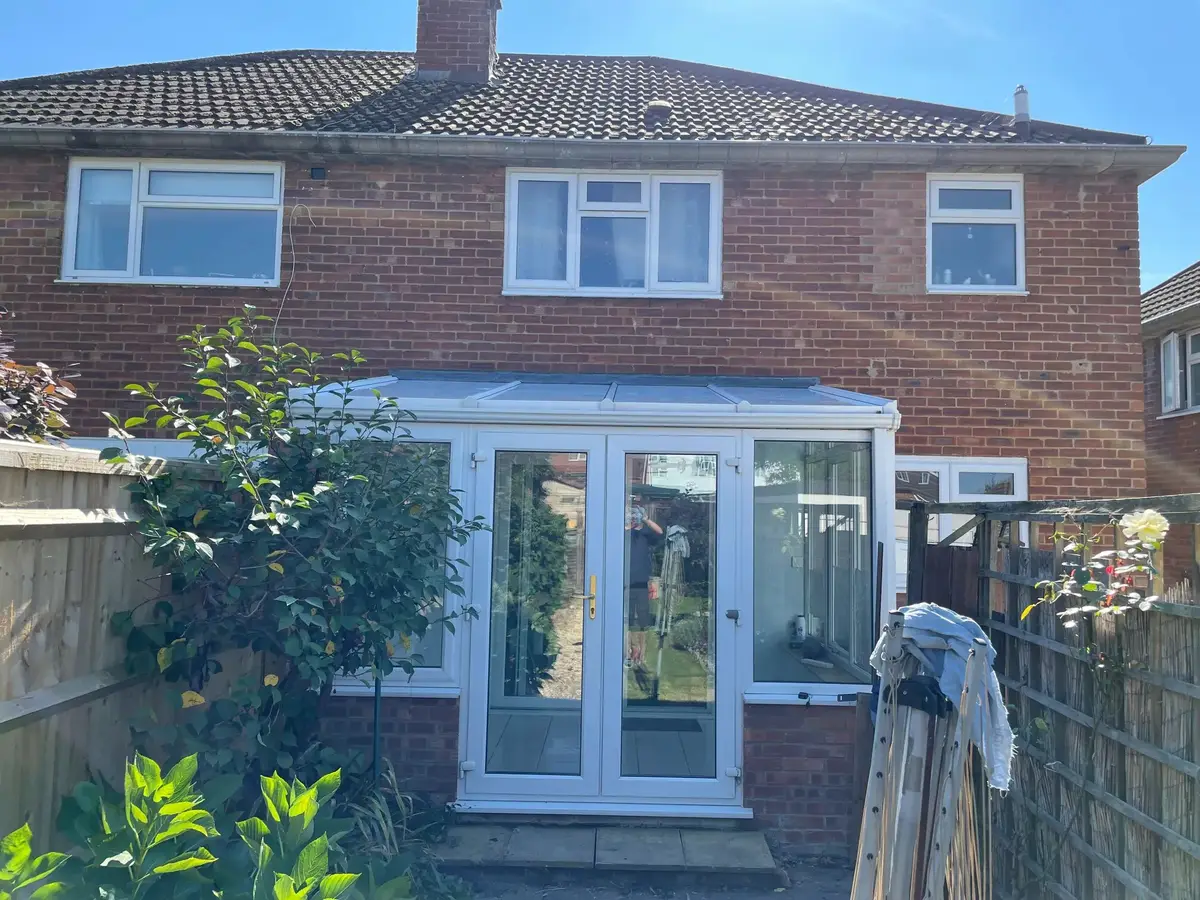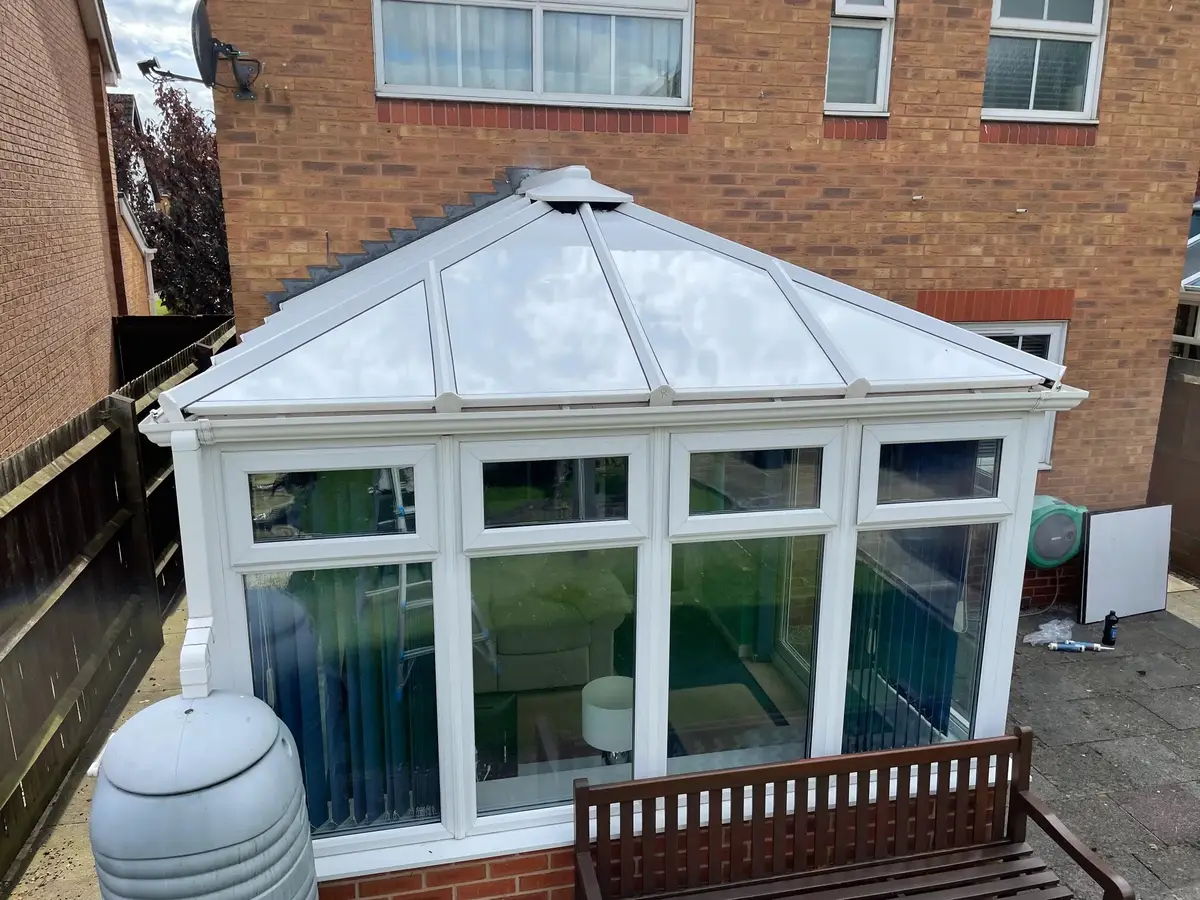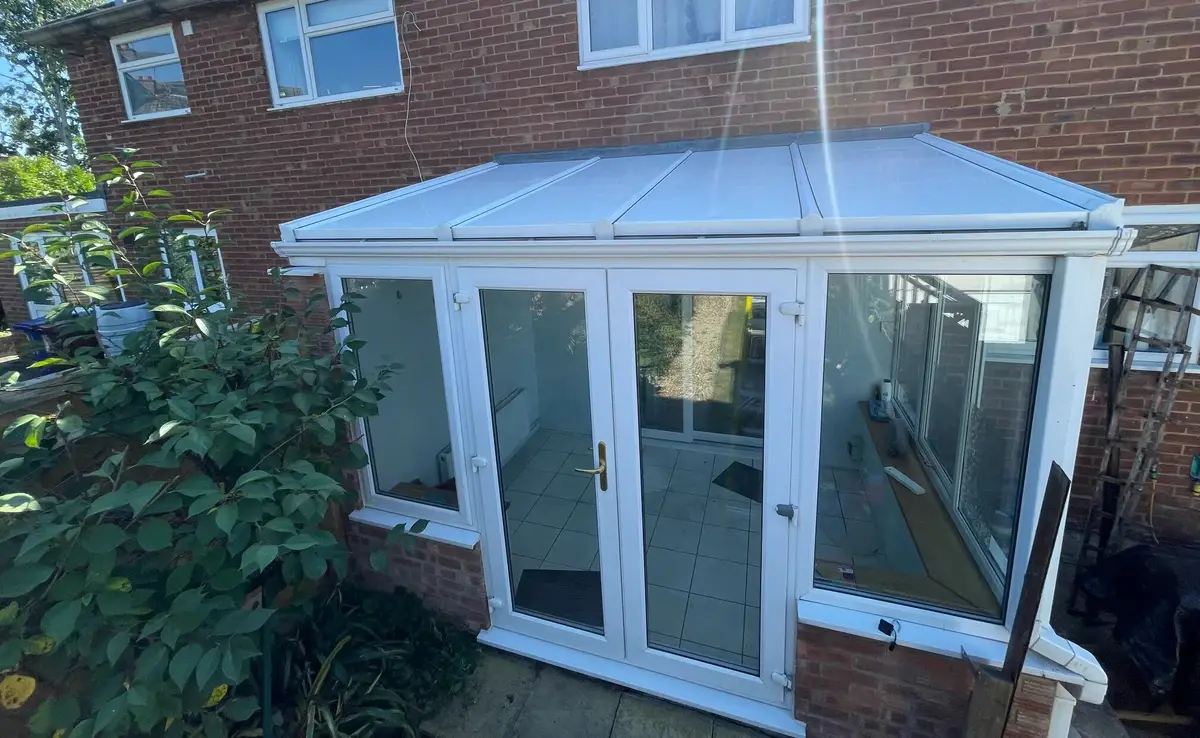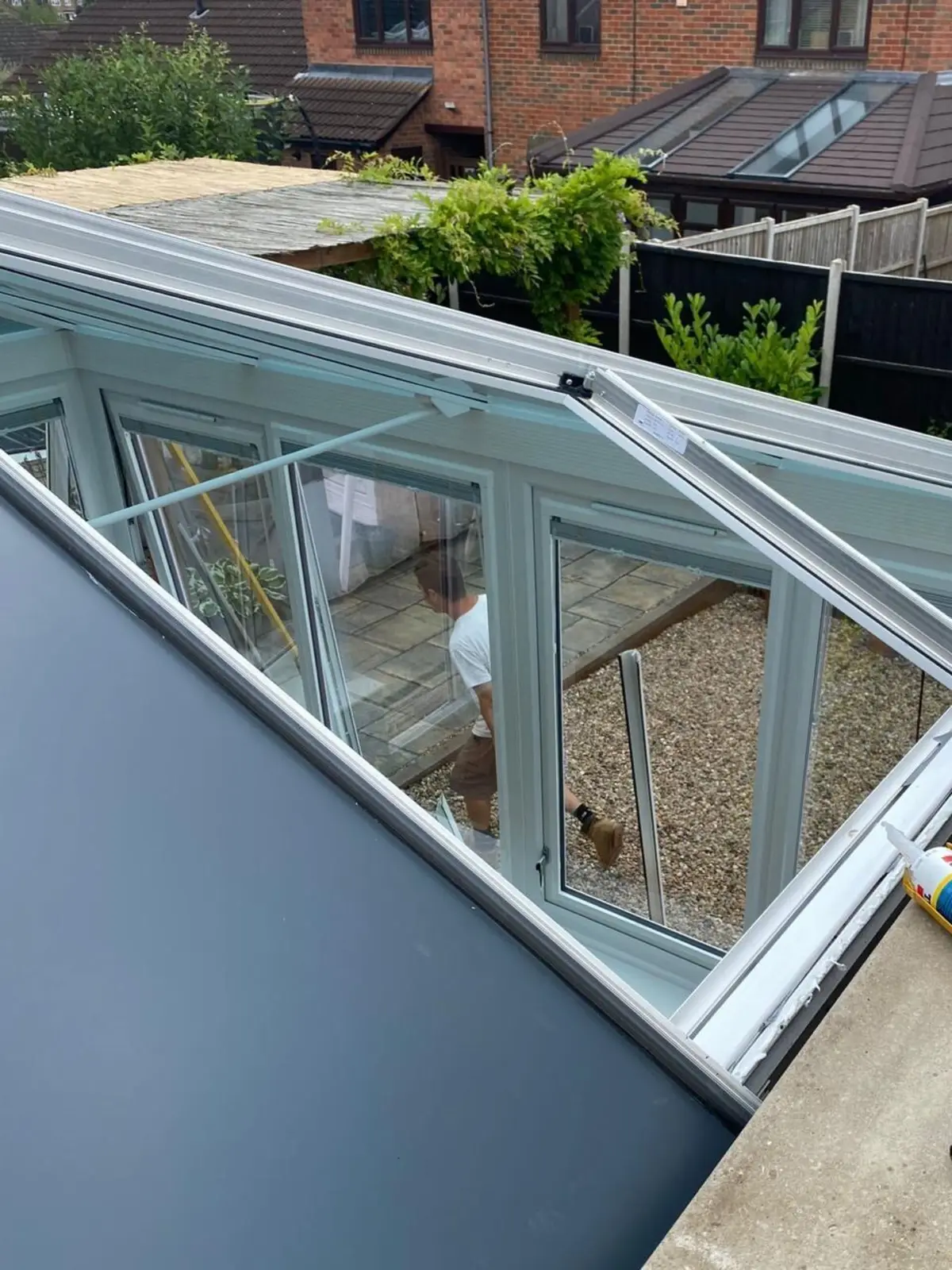
Condensation forms when warm, damp room air touches a surface colder than its dew point. At 20°C and 70% humidity that is about 14.4°C. On a 0°C night the inside of an old glass roof sits near 14.4°C and 16 mm polycarbonate near 15.4°C, so they drip. The inner skin of a 75 mm insulated panel stays about 19°C, so condensation largely stops.
Wet furniture, puddles on the windowsill and black mould along the glazing bars are the usual signs. Most people assume the roof is leaking. Often it is not: the water came from inside the room. Here is how to tell which, and what actually stops it.
Leak or condensation? A quick test
- Condensation appears on cold mornings, even when it has not rained. The droplets cover the whole inner surface or line up along the bars, then run to the lowest point and drip.
- A leak appears during or after rain, usually in one spot, often near the house wall, a ridge or a damaged seal.
- Water inside the polycarbonate, trapped in the hollow channels of the sheet, is a third problem. It shows as lines of droplets or green growth inside the sheet itself and means the end seals or tape have failed.
If it is a leak, see our guide on whether to repair or replace a leaking conservatory roof. The rest of this page is about condensation.
The dew point, in numbers
Air can only hold so much water vapour, and warm air holds more than cold. When air touches a cold surface and cools below its dew point, the extra water comes out as droplets. The more humid the room, the higher the dew point and the easier it is to reach.
| Room at 20°C with relative humidity of | Dew point (surfaces colder than this get wet) |
|---|---|
| 50% | 9.3°C |
| 60% | 12.0°C |
| 70% | 14.4°C |
| 80% | 16.4°C |
| 90% | 18.3°C |
How cold does the inside of your roof get?
The inner surface temperature depends on the roof's U-value. The worse the insulation, the closer the inside face gets to the outside temperature. These are worked out for a room at 20°C, using standard surface resistance for a roof:
| Roof | U-value (W/m²K) | Inner surface at 0°C outside | Humidity that starts condensation | Inner surface at minus 5°C outside | Humidity that starts condensation |
|---|---|---|---|---|---|
| Old glass (pre-2002) | 2.8 | 14.4°C | about 70% | 13.0°C | about 64% |
| 16 mm polycarbonate | 2.3 | 15.4°C | about 75% | 14.3°C | about 70% |
| 25 mm polycarbonate | 1.6 | 16.8°C | about 82% | 16.0°C | about 78% |
| Modern low-e glass | 1.1 | 17.8°C | about 87% | 17.3°C | about 84% |
| 75 mm insulated panel | 0.43 | 19.1°C | about 95% | 18.9°C | about 94% |
The real picture is worse than the table for old roofs, for two reasons. On clear nights the roof radiates heat to the sky and its outer face drops below the air temperature. And the aluminium glazing bars conduct cold far better than the sheets, so they are colder still. That is why drips so often start along the bars.
A room with a few people in it, some plants and washing drying on a rack can reach 70 to 80% humidity easily. With an old glass or thin polycarbonate roof, that means water on a cold night.
Where the moisture comes from
- Drying clothes indoors, the biggest single source in most homes.
- People breathing, more so with a family at the dinner table.
- Plants, which release water through their leaves.
- Pets, fish tanks and cooking steam drifting through from the kitchen.
- Portable gas or paraffin heaters, which give off water vapour as they burn. Avoid them in a conservatory.
Quick fixes that make a difference
- Ventilate. Open trickle vents and the roof vent for a while each day, even in winter. Replacing damp air with drier outside air is the cheapest fix there is.
- Stop drying washing in there. If you must, run a dehumidifier at the same time.
- Use a dehumidifier. A compressor model drawing around 200 W for 8 hours uses 1.6 kWh, about 42p at the October to December 2026 electricity cap of 26.32p per kWh.
- Heat steadily. Short bursts of heat warm the air and fill it with moisture, then the roof cools it and it drips. A low, steady setting is better than blasts.
- Wipe the bars in the morning. It does not solve anything, but it stops mould and protects the frame seals.
Signs condensation is doing damage
A few drips on a January morning are a nuisance. Months of them cause real problems. Watch for black mould spots on the glazing bars and seals, swollen or stained window boards, damp patches on the dwarf wall plaster and a musty smell when the room has been shut up. Wooden furniture and rugs left under the worst drip points will mark and rot.
Mould on the seals is worth treating early, because it shortens their life and can let rain in later. If these signs come back every winter however much you ventilate, the roof itself is the cold surface causing them, and changing the roof is what ends it.
Does insulating a conservatory roof cause condensation?
Done badly, it can. Foil, quilt or board fitted inside the room under an existing polycarbonate roof keeps the old sheet cold. If warm damp air gets past the insulation, it condenses on that cold sheet where nobody can see it. The water soaks the insulation, drips out at the edges or feeds mould. A proper internal system needs a continuous, sealed vapour control layer on the warm side. Our conservatory roof insulation page covers what good internal work looks like.
An insulated panel roof avoids the problem differently. There is no cold sheet left above. The panel is the roof: two aluminium skins bonded to a solid 75 mm foam core, with no hollow cavity for damp air to reach.
What changes with an insulated panel roof
With the inner skin at about 19°C on a freezing night, the room would need around 95% humidity before the panels themselves got wet. In normal living that does not happen. Condensation on the roof largely stops.
Be realistic about the rest of the room. The glazed walls and window frames are unchanged. If they are old double glazing, they can still mist up on the coldest mornings in a humid room, so keep ventilating. Removing the cold roof takes away the biggest cold surface, which also lowers how much water ends up on the walls.
Prices start at £3,000 fitted for roofs up to 12 m² and £4,000 for 12 to 25 m², including the old roof being removed, fitting and a 10 year insurance backed guarantee.
Next step
If your roof drips every winter, replacing the polycarbonate with insulated panels is the lasting fix. Get a price range from the cost calculator or book a free survey.
Questions people ask
Why is there condensation inside my polycarbonate sheets?
Water trapped in the hollow channels means the end seals or breather tape have failed. It cannot be wiped away and usually means the sheets need replacing.
Will a dehumidifier stop conservatory roof condensation?
It helps a lot in a humid room, at around 42p for 8 hours of a 200 W unit. It does not warm the roof, so on the coldest nights some drips may still appear.
Do insulated roof panels get condensation?
The inner skin stays close to room temperature, about 19°C on a 0°C night with 20°C inside, so condensation on the panels largely stops.
Is conservatory condensation a sign the roof needs replacing?
Not on its own. Combined with leaks, discoloured sheets or water inside the channels, it usually is. See signs your roof needs replacing.