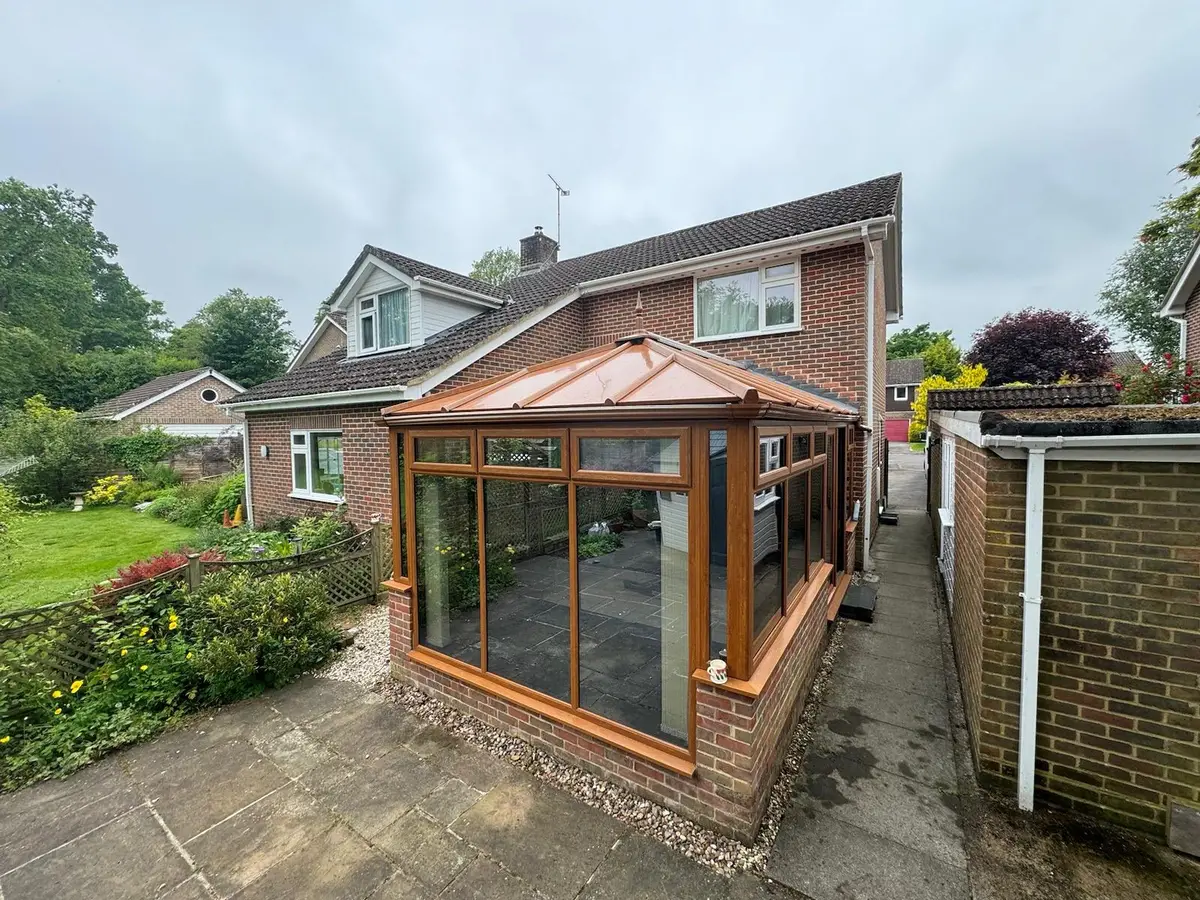
You can insulate a conservatory roof by lining it from inside with foil quilt, battens and plasterboard, usually £1,000 to £3,200, or by replacing it with insulated panels from £3,000. Internal insulation costs less, but it keeps the old outer sheet, with its leaks and rain noise, and adds weight to old bars. Panels replace the problem roof instead of covering it.
The two routes
Insulation fitted under the old roof
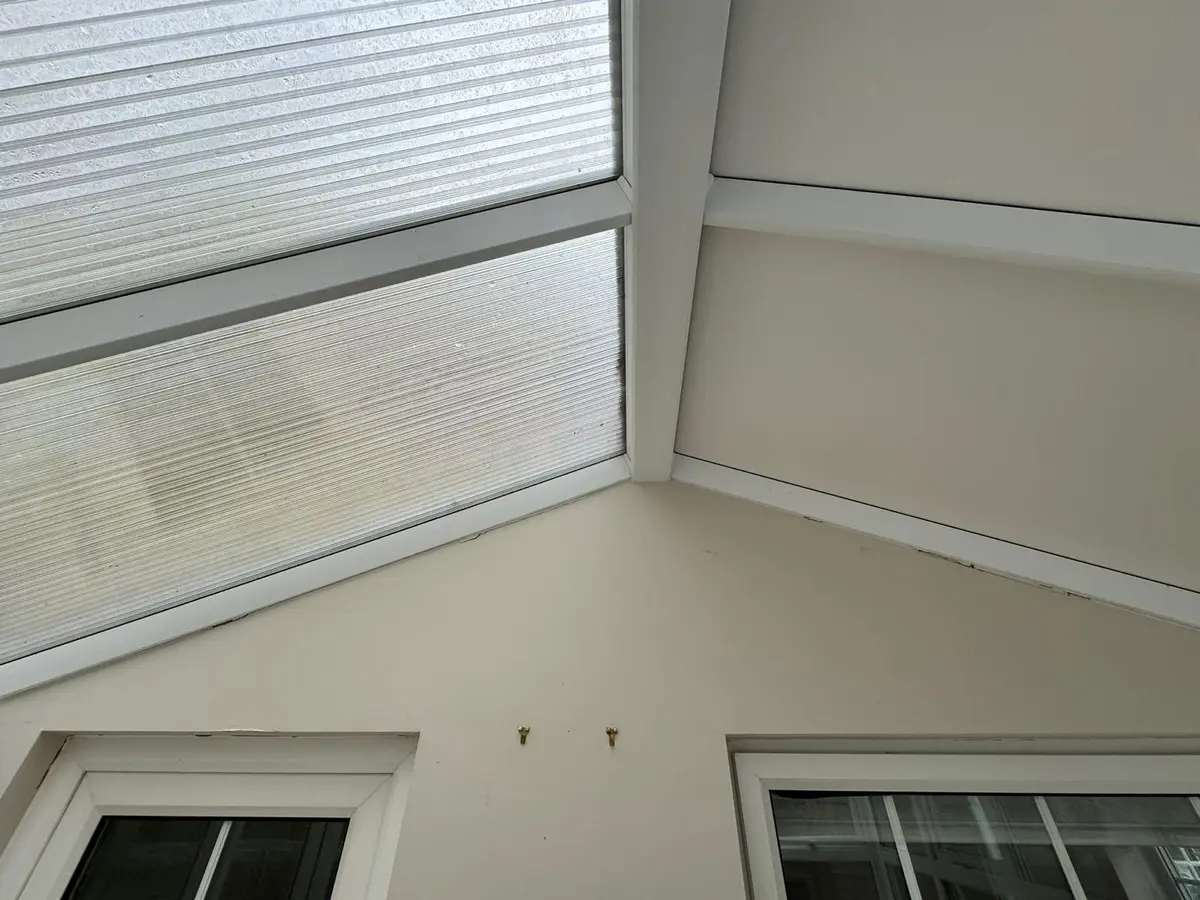
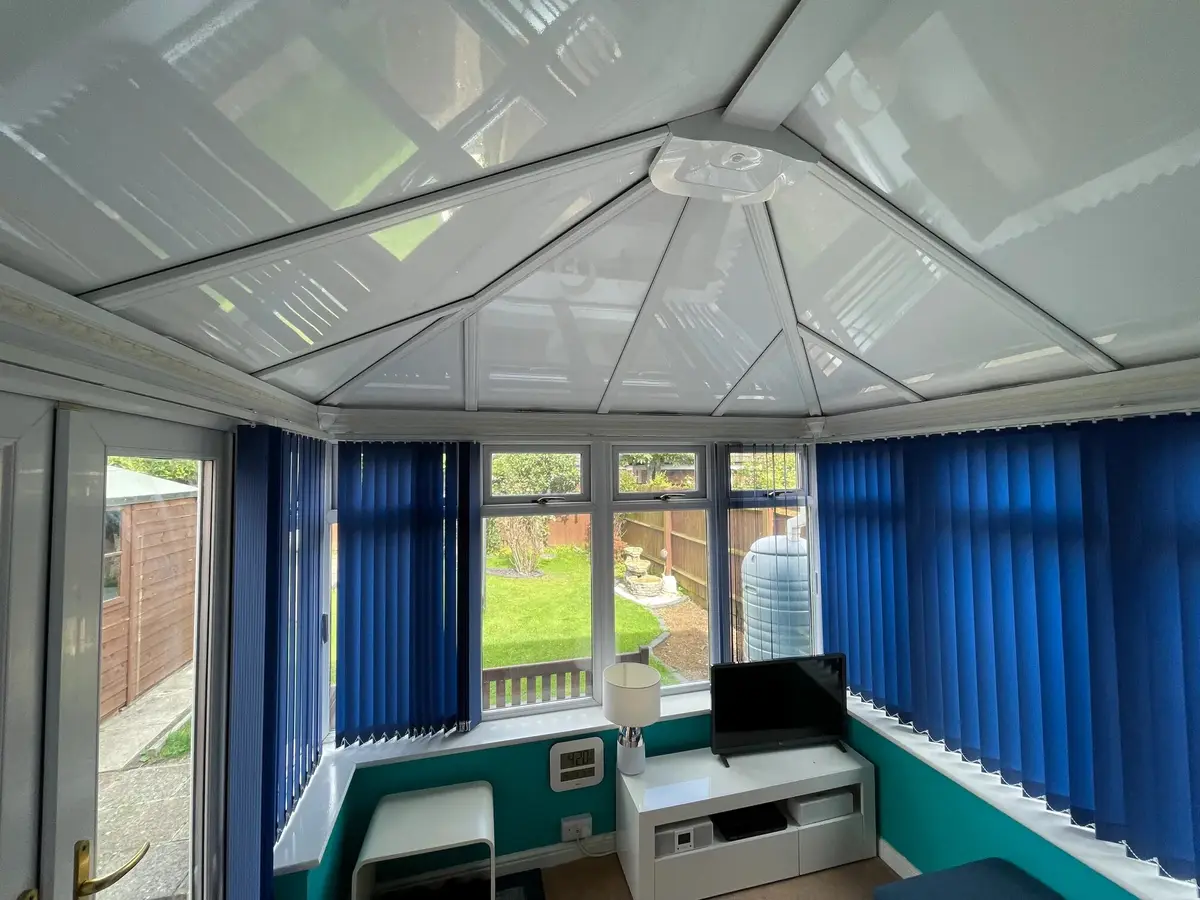
An internal system keeps your polycarbonate or glass roof in place and builds a ceiling underneath it. Fitters screw timber or aluminium battens to the roof bars, lay a multifoil quilt or rigid insulation board between and over them, then finish with plasterboard and plaster or with uPVC cladding. Lights and a pelmet are often added at the same time.
Fitted internal insulation usually costs £1,000 to £3,200, with an average of about £2,850. DIY foil kits cost a few hundred pounds but only cover the first part of the job.
Replacing the roof with insulated panels
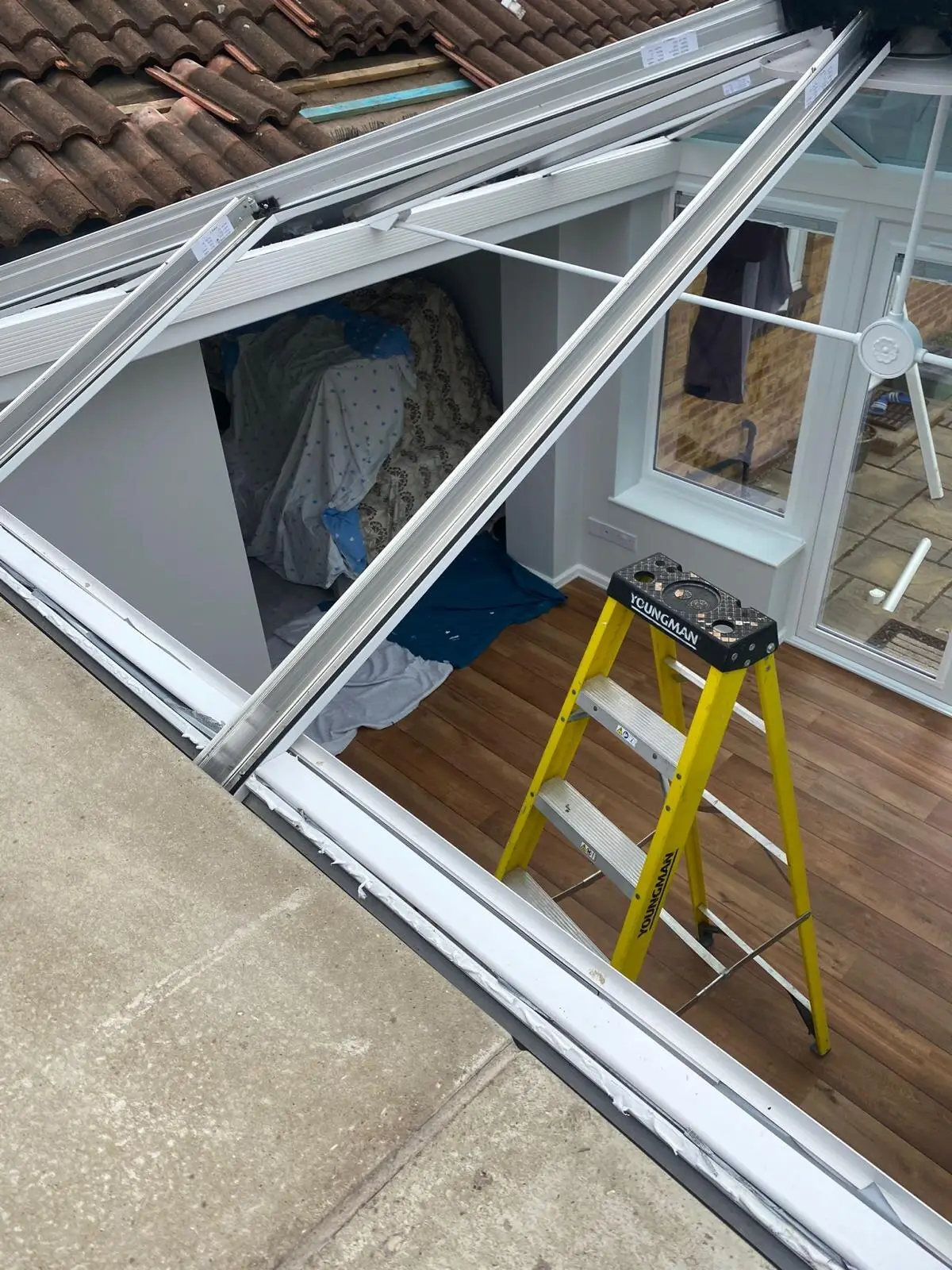
The other route takes the old covering off altogether. The polycarbonate sheets or glass units are removed and recycled, and made-to-measure panels with two aluminium skins and a 75 mm foam core go onto your existing roof bars. The U-value is about 0.43 W/m²K, and fitted prices start from £3,000. The full specification is on our insulated conservatory roof panels page.
Side by side
| Internal insulation kit | Insulated panel roof | |
|---|---|---|
| Typical fitted cost | £1,000 to £3,200 | From £3,000, most pay £3,000 to £7,500 |
| Old roof sheet | Stays in place | Removed and recycled |
| Weight on the old bars | Old roof plus battens, insulation and board | Old roof off, panels on |
| Leaks from the old roof | Still possible, now hidden above the ceiling | Gone with the old sheets |
| Rain noise | Reduced, as the outer sheet still drums | Damped by the foam core |
| Condensation risk | Can form in the gap under the cold old sheet | Inner skin stays near room temperature |
| Building control | Often still needed | Normally needed, we apply for you |
| Guarantee from us | Not a product we fit | 10 year insurance backed |
The honest drawbacks of internal insulation
It adds weight to bars built for a light roof
Polycarbonate roof bars were designed to carry polycarbonate. An internal system hangs battens, insulation and a ceiling board from them, and 12.5 mm plasterboard on its own weighs around 8 to 9 kg per m² before any plaster goes on. On a sound, well built frame that may be fine, but on an older roof with sagging bars it can make matters worse.
The old roof is still up there
Internal insulation does nothing to the outside of the roof. If the polycarbonate is yellowed, the seals are cracked or the sheets are slipping, those faults carry on above your new ceiling where you cannot see them. A leak that used to drip onto the floor may now soak into insulation and plasterboard first, and our guide to a leaking conservatory roof explains why that is worth avoiding.
Condensation can move rather than stop
Warm, moist air from the room will always try to reach the coldest surface it can find. If the vapour control layer is not fully sealed around every batten, screw and light fitting, that surface becomes the underside of the old roof sheet, inside the new ceiling. Our conservatory roof condensation guide covers the causes in more detail.
It still changes the rules
A conservatory is exempt from building regulations only while at least 75% of the roof is translucent, along with other conditions on the walls, floor area, doors and heating. Lining the roof with an opaque ceiling can take it out of that exemption just as a panel roof does, so building control approval is often still needed. Ask any installer who they will notify and what certificate you will get.
Rain noise is only partly fixed
The outer polycarbonate sheet still takes the rain and hail. A ceiling underneath muffles it, but the drumming is still there, whereas the foam core of a panel roof damps it at the source.
When internal insulation can make sense
We do not want to talk anyone out of a cheaper option that suits them. Internal insulation can be a fair choice if all of these are true:
- the roof covering is fairly recent, clear of leaks and not slipping
- the roof bars are straight and the frame shows no movement
- the budget is firmly under £3,000
- you have checked with building control what they need
If your roof already leaks, drips or has sheets on the move, spending money underneath it is paying to hide a roof that will still need replacing.
When a panel roof is the better buy
A panel roof costs a little more than a typical internal job, and the gap is smaller than many people expect. For that difference the leaking, noisy outer sheet goes, the bars carry the panels instead of the old roof plus a ceiling, and you get a roof with a known U-value of about 0.43. On a 12 m² roof with 20°C inside and 0°C outside, heat loss falls from about 552 W through 16 mm polycarbonate to about 103 W.
The building control application, removal of the old roof and a 10 year insurance backed guarantee are included. Prices by size are on our conservatory roof panel prices page.
What about DIY foil kits?
Foil quilt kits sold for stapling or taping to roof bars cost a few hundred pounds. They take the edge off winter cold, but they leave gaps at every bar, and trapping a foil layer against a cold roof sheet without a sealed vapour control layer is a common cause of hidden condensation. If you try one, keep it clear of any light fittings and cables, and check it after the first cold snap.
Questions people ask
Does insulating under a conservatory roof cause condensation?
It can. If moist air gets past the insulation, it condenses on the underside of the cold old roof sheet, inside the ceiling where you cannot see it. A fully sealed vapour control layer reduces that risk.
Can I insulate my conservatory roof myself?
You can fit a DIY foil kit, but a proper internal ceiling or a replacement panel roof is a job for a fitter, and either can need building control approval once the roof is no longer translucent.
How heavy is internal conservatory roof insulation?
It depends on the build, but 12.5 mm plasterboard alone weighs around 8 to 9 kg per m², before battens, insulation and plaster, all hung from roof bars that still carry the old roof.
Do I need building control for internal roof insulation?
Often, yes. Once the roof is lined with an opaque ceiling it can lose the 75% translucent test that keeps a conservatory exempt, so check with your council building control before work starts.
What does conservatory roof insulation cost in the UK?
Fitted internal insulation is usually £1,000 to £3,200, with an average of about £2,850. Replacing the roof with insulated panels starts from £3,000 and most homes pay £3,000 to £7,500.