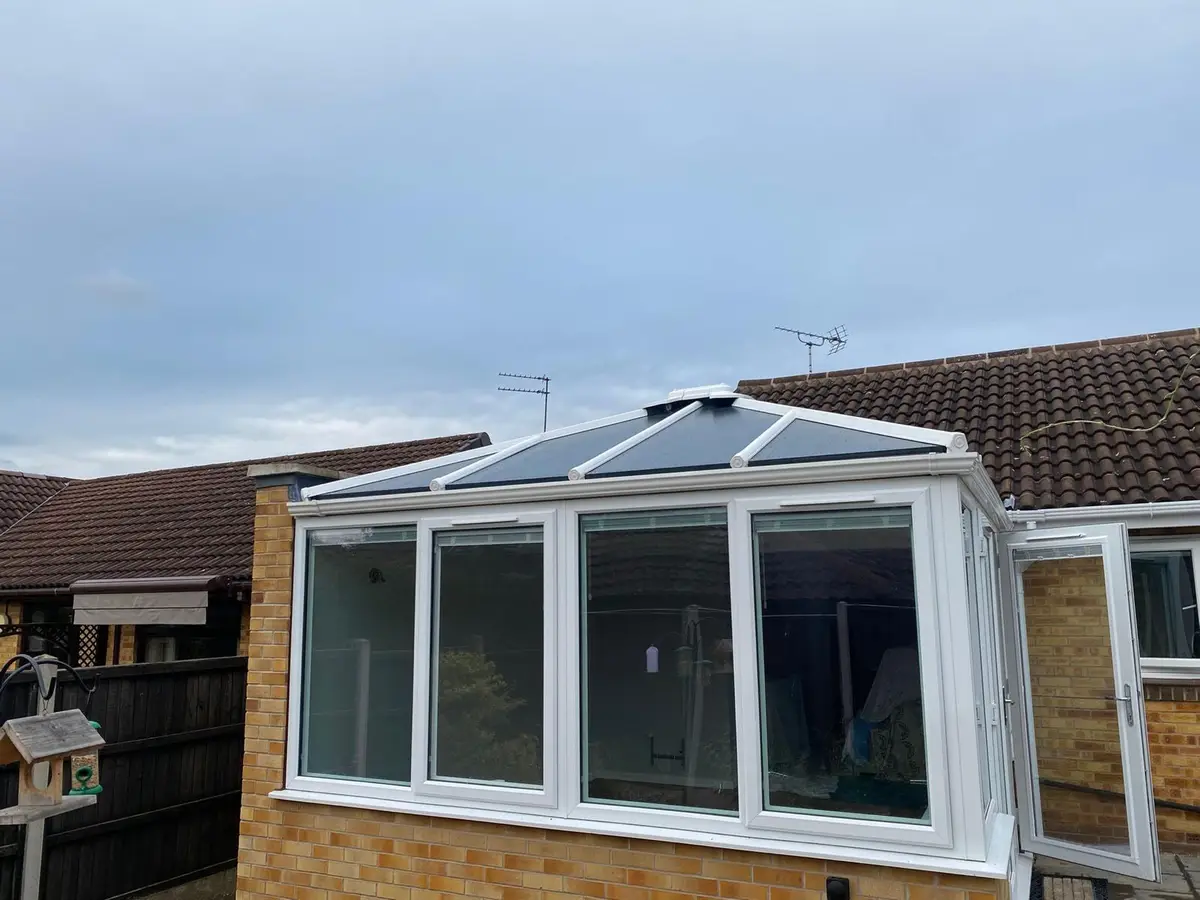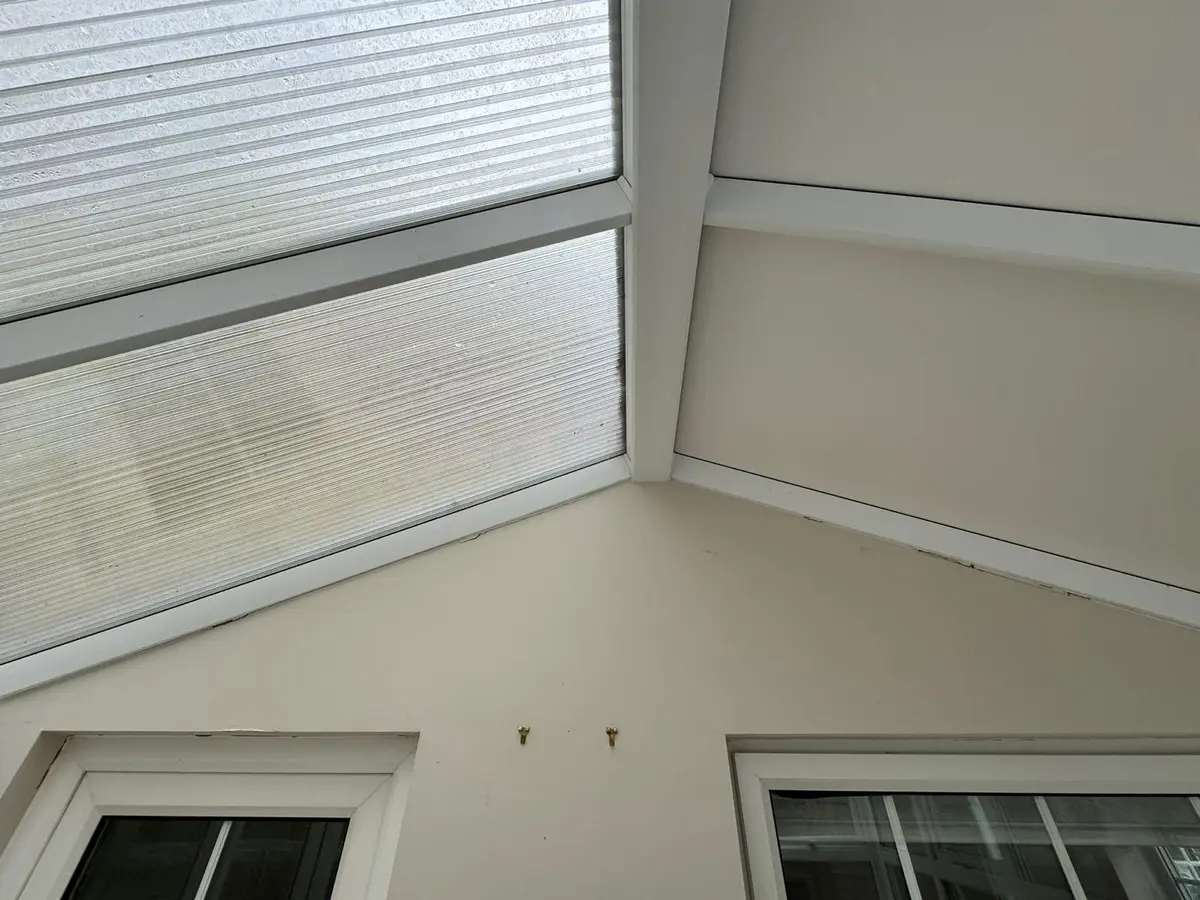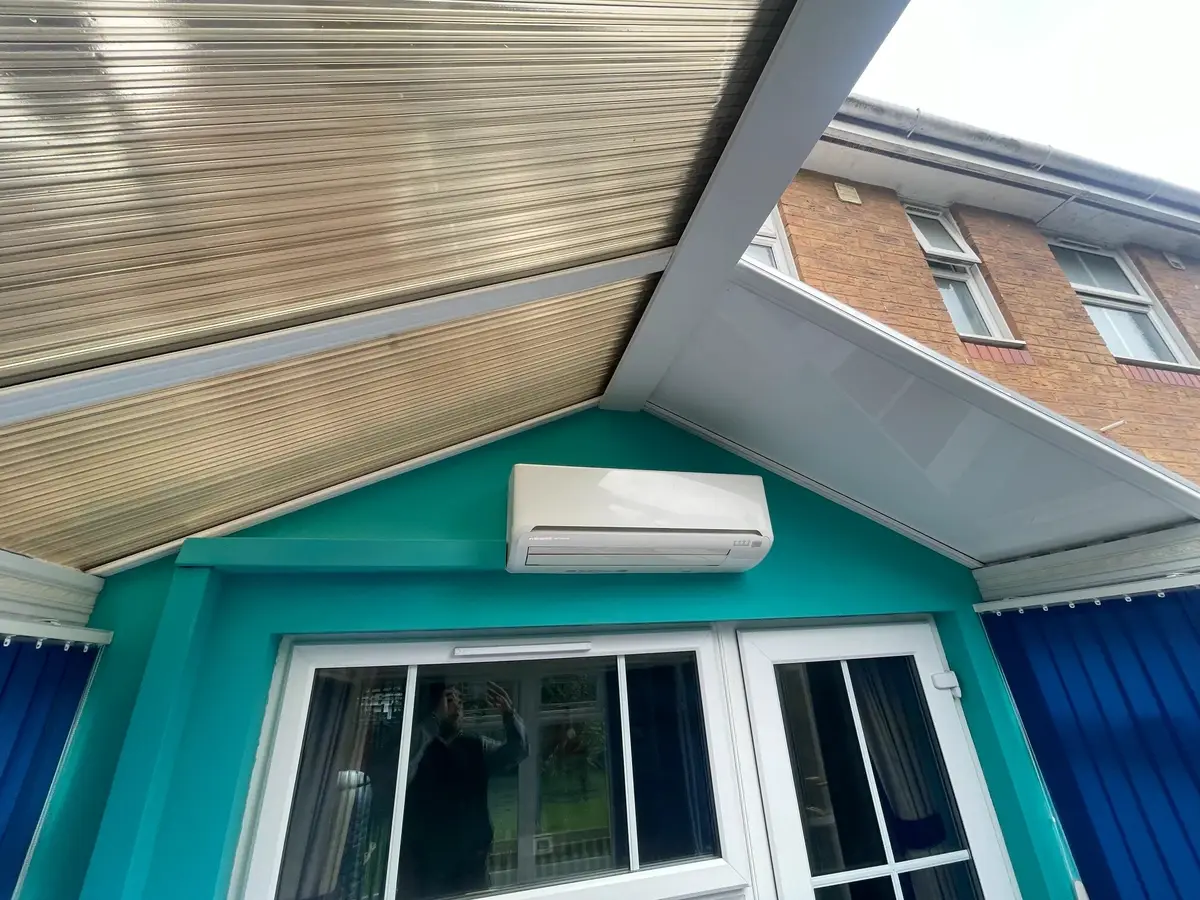
Rain is loud on polycarbonate because a thin, light, hollow sheet vibrates like a drum skin every time a drop hits it. The Met Office counts rain as heavy above 4 mm an hour, which drops about 48 litres an hour onto a 12 m² roof. Blinds and soft furnishings help a little. A 75 mm foam core panel roof damps the drumming at the source.
What is actually making the noise
Each raindrop hitting a roof is a tiny hammer blow. On a heavy roof, the energy disappears into the mass. On a sheet of multiwall polycarbonate, which is thin, stiff and very light for its size, the blow makes the whole panel flex and ring. The hollow channels inside the sheet act like small sound boxes and carry the vibration across it.
The sums show why it adds up. Rain at 4 mm an hour, the Met Office threshold for heavy rain, puts 4 litres on every square metre each hour. On a 12 m² roof that is 48 litres an hour, delivered as millions of separate drops. Hail is worse, because each stone carries far more energy than a raindrop.
Glass is heavier than polycarbonate, so a glass roof is usually quieter in rain, though hail on glass is still sharp and loud. A roof with some mass and a soft, damping layer inside it is quieter again.
How loud does it feel?
Loudness is measured in decibels, and the scale is not linear. A rise of 10 decibels sounds roughly twice as loud to most people. That is why a noise that seems only a little worse on a meter can make a room feel very different. In a polycarbonate conservatory, heavy rain is often loud enough that people raise their voices or turn the television up. In most of the UK, rain falls on well over 100 days a year, so this is not a small annoyance for anyone using the room every day.
Noises that are not rain
Some conservatory roof noises have other causes, and some point to faults worth fixing.
| Noise | Usual cause | What to do |
|---|---|---|
| Creaking, ticking or cracking on sunny days | The sheets and aluminium bars expand at different rates as they heat up and slide against each other. Polycarbonate grows by about 0.065 mm per metre for every 1°C, so a 3 m sheet warming by 40°C gets nearly 8 mm longer. | Normal on many roofs. Loud cracks can mean sheets are pinched too tightly. |
| Rattling or tapping in wind | Loose glazing bar caps, worn gaskets or sheets that have started to slip | Get it checked. Slipping sheets let water in. |
| Whistling in wind | A gap at an end cap, ridge or where the roof meets the house | Seal the gap. It is also losing heat. |
| Dripping or splashing | Blocked or sagging gutters overflowing onto the frame | Clear the gutters, or replace them if they have dropped. |
| Scratching or scuttling | Birds, squirrels, or debris blown across the sheets | Trim overhanging branches. |
Fixes, from cheapest to most effective
Soft furnishings
Conservatories are full of hard surfaces: glass, uPVC, hard floors. Sound bounces around them and seems louder. Rugs, curtains, cushions and upholstered chairs soak up some of those reflections. They do nothing to the drumming itself, but they can take the harsh edge off.
Roof blinds
Fabric or pleated roof blinds add a thin layer under the roof. They make a small difference to rain noise and a bigger one to glare. Do not expect them to change a storm into a patter.
Check and tighten the roof
Loose caps and worn gaskets let sheets vibrate more freely. Having the roof checked and resealed can reduce rattles, though it does not change how the sheet itself responds to rain.
Internal insulation under the old roof
Fitting insulation and a ceiling inside the room, under the existing polycarbonate, does reduce rain noise noticeably, because it adds layers between you and the sheet. It costs about £1,000 to £3,200 fitted, averaging around £2,850. The old polycarbonate stays on top, though, and it needs a well sealed vapour control layer or condensation can form hidden above it. Our conservatory roof insulation page compares it with other options.
Thicker polycarbonate
Going from 16 mm to 25 or 35 mm polycarbonate helps slightly with noise, and cuts heat loss from a U-value of 2.3 to 1.6 or 1.4. It is still a hollow plastic sheet, so the drumming remains. New polycarbonate costs about £2,000 to £3,500 for a 3 m by 3 m roof.
Replace the roof with insulated panels
An insulated panel roof is two aluminium skins bonded to a 75 mm solid foam core. The foam damps the skin, so a drop landing on it cannot set the panel ringing the way it does a hollow sheet. There are no hollow channels to carry the sound. Most people describe heavy rain afterwards as a soft background sound rather than a racket.
To be clear about what to expect: you will still hear a proper downpour or hail, just much more quietly. Roof lights are glazed units, so rain on them sounds like rain on a window, which is far quieter than on polycarbonate.
If you work or sleep near the conservatory
Rain noise matters more when the room has a job to do. A conservatory used as a home office means video calls with a drumming roof in the background. A playroom or reading room gets abandoned every time a shower passes over. A bedroom with a door onto the conservatory hears the roof at night.
If any of those describe your house, rank noise alongside heat when you compare options. Blinds and rugs help a sitting room. A room you work in every day usually needs the roof itself changed.
What else changes with a panel roof
Noise is rarely the only complaint. The same roof cuts heat loss by about 80% against 16 mm polycarbonate: on a 12 m² roof at 20°C inside and 0°C outside, from about 552 W down to about 103 W. It stops direct summer sun through the roof, and it largely stops condensation, because the inner skin stays close to room temperature. The trade-off is less daylight, which roof lights help with. See insulated roof panels vs polycarbonate for the full comparison.
What it costs and how long it takes
Fitted prices start at £3,000 for roofs up to 12 m², £4,000 for 12 to 25 m² and £5,000 for 25 m² and over. That includes removing the old roof, panels in your colour, fitting, the building control application and a 10 year insurance backed guarantee. Most small lean-to and Edwardian roofs are fitted in 1 day, and larger roofs take 2 to 3 days.
Next step
If rain has been driving you out of the room, get a figure from the cost calculator, then book a free survey and fixed quote.
Questions people ask
Why is my polycarbonate conservatory roof so noisy?
It is thin, light and hollow, so each raindrop makes it flex and ring like a drum skin. The hollow channels carry the sound across the sheet.
Are insulated conservatory roof panels quiet in the rain?
Much quieter than polycarbonate. The 75 mm foam core damps the aluminium skin, so heavy rain becomes a soft background sound.
Why does my conservatory roof creak in the sun?
The sheets and aluminium bars expand at different rates as they warm up and move against each other. Occasional ticking is normal; loud cracks or rattles are worth a check.
Do roof blinds reduce rain noise?
A little. They help more with glare than with noise.