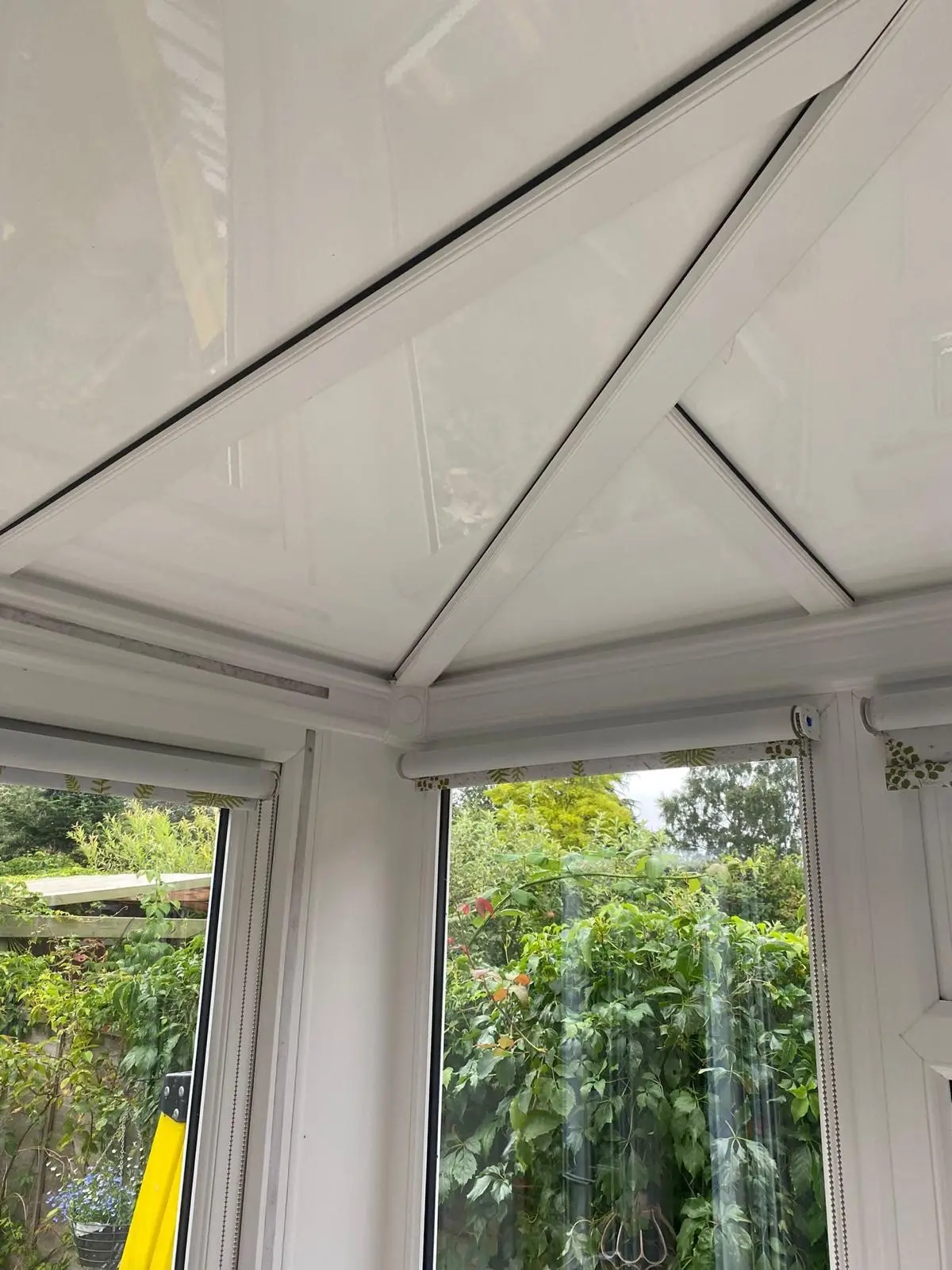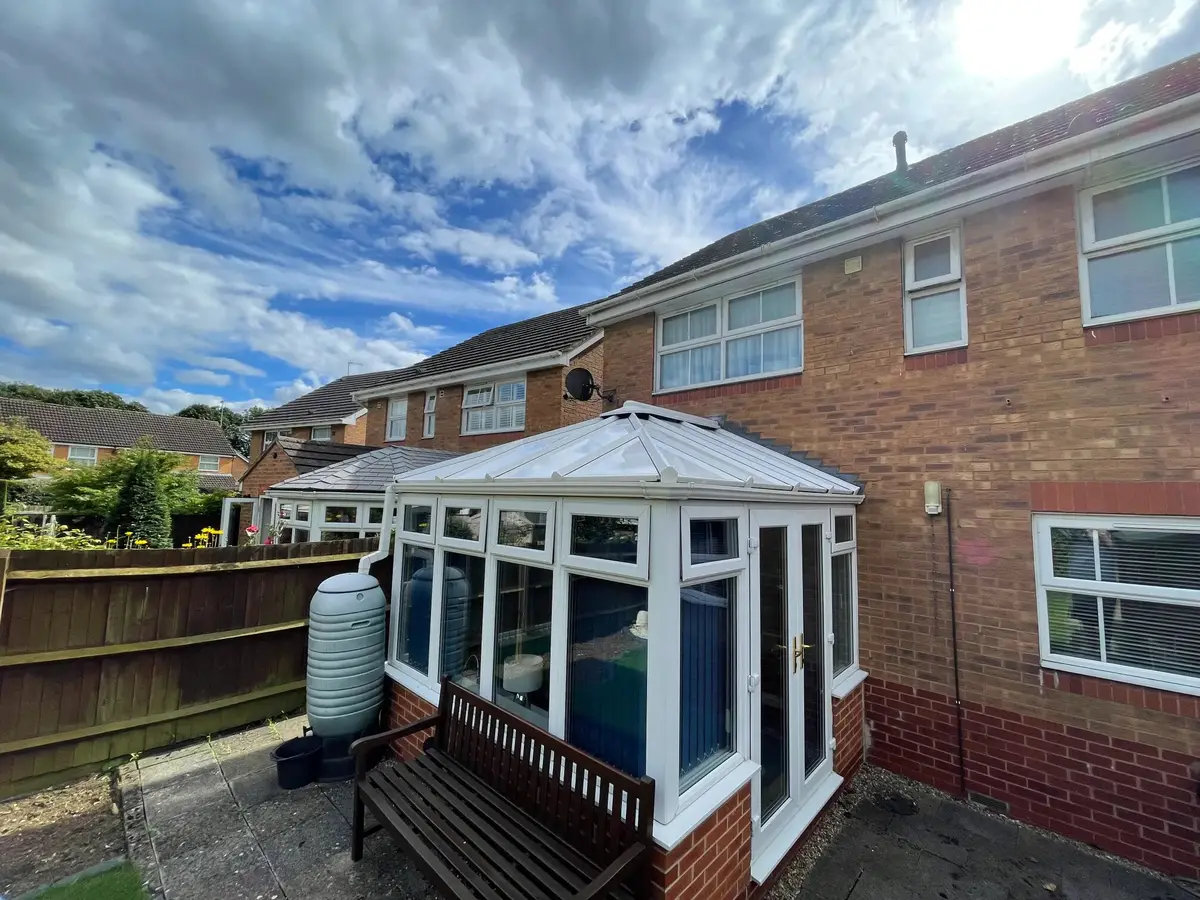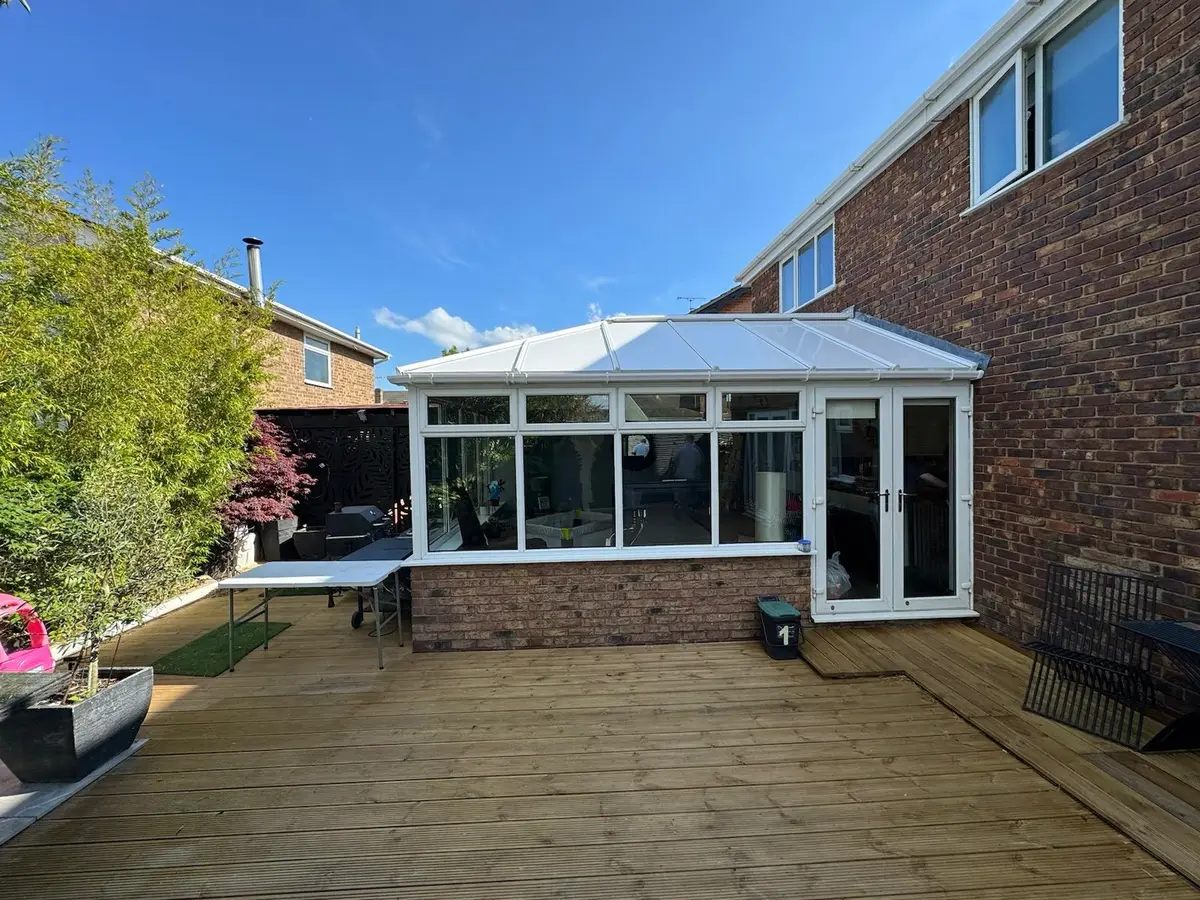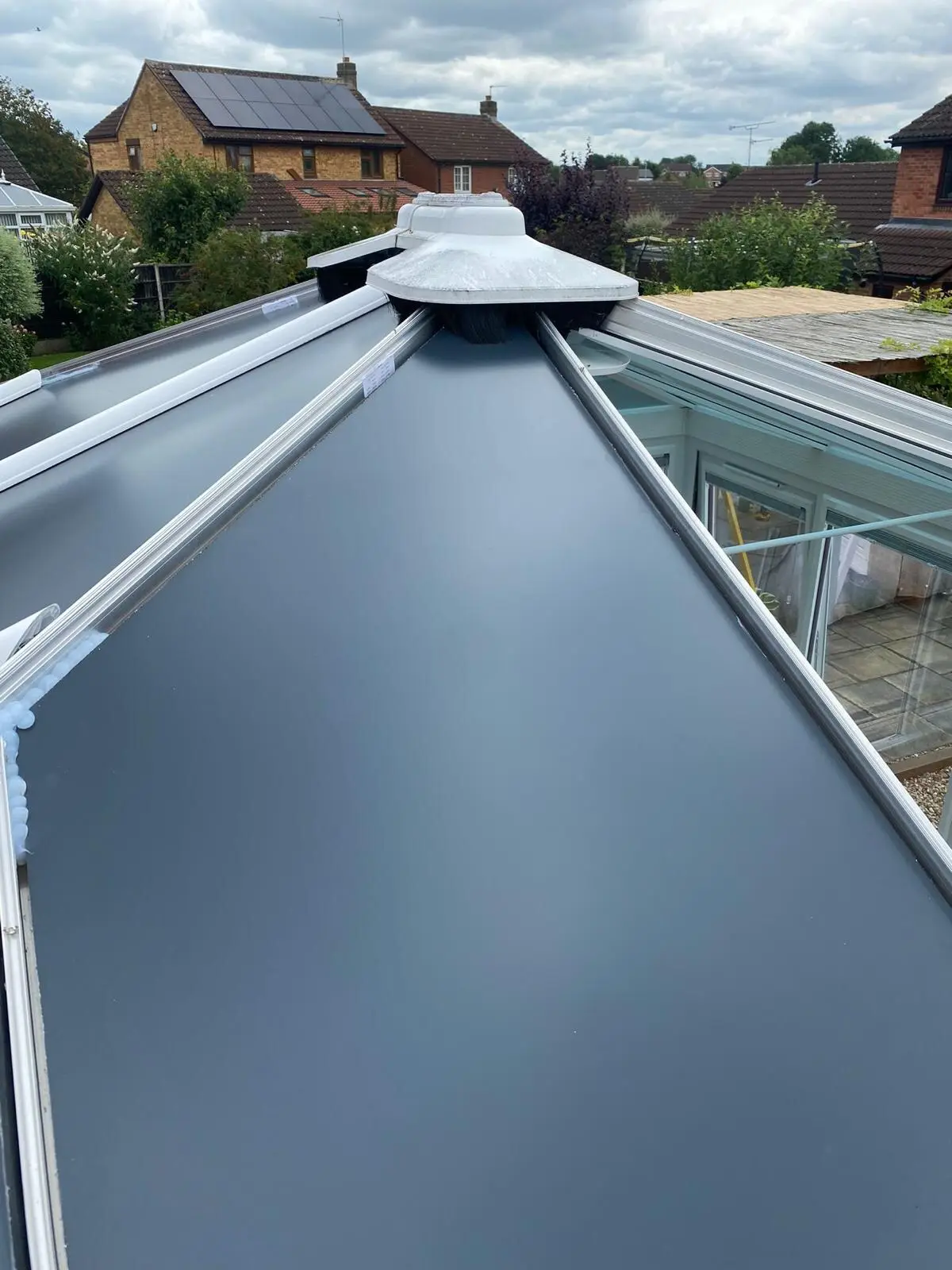
When you sell, the buyer's solicitor will ask whether the new conservatory roof had building control approval, and the proof is the completion certificate. A solid insulated roof removes the conservatory exemption, so approval is normally needed. Keep the certificate, the 10 year guarantee and the quote together, and plan for about 2 to 3 months from survey to certificate if you are about to list.
Why the roof matters when you sell
To most buyers a conservatory is either a useful extra room or a problem they will have to fix. An old polycarbonate roof that has gone yellow, drips condensation and roars in the rain is often noted in a buyer's survey as something to budget for. A newer insulated roof takes that off the list, provided the paperwork is in order.
The paperwork is the part that trips people up. Changing a translucent conservatory roof to a solid insulated one changes its status under building regulations, and conveyancing solicitors know to ask about it.
Why a solid roof needs building control approval
A conservatory is exempt from building regulations only while at least 75% of the roof and 50% of the walls are translucent, the floor area is under 30 m², and it is separated from the house by external quality doors with no fixed heating from the house system. Put a solid insulated roof on it and it no longer meets the first test, so building control approval is normally needed.
Planning permission is a separate question. It is not normally needed, because the footprint and height do not change and the work falls under permitted development. Listed buildings, conservation areas, national parks, National Landscapes and homes where permitted development rights have been removed are the exceptions. Our guides to building regulations for solid conservatory roofs and planning permission to replace a conservatory roof cover both in full.
What buyers and their advisers will ask for
| Who asks | What they want | What to give them |
|---|---|---|
| Buyer's solicitor | Proof the roof work had building control approval | The completion certificate |
| Buyer's solicitor | Whether any guarantee passes to the buyer | The guarantee document and its terms |
| Buyer's surveyor | What the roof is made of, its age and condition | The quote or invoice showing the date and specification |
| Mortgage lender's valuer | That the structure is sound and approved | Usually satisfied by the solicitor's checks |
| Buyer's home insurer | The construction of the building | Roof specification from the quote |
| Local planning (only in special areas) | Consent where it was needed | Planning decision notice, if applicable |
The property information form you fill in when you sell asks about building works carried out while you owned the house, and whether approvals were obtained. Answer it honestly. Leaving the roof off the form causes more trouble later than admitting a gap now.
The completion certificate
After the roof is fitted, the building control officer inspects the work. Once they are satisfied, the council or approved inspector issues a completion certificate, sometimes called a final certificate. It confirms that the work met the regulations as far as they could tell.
We make the building control application on your behalf and agree the specification with building control before ordering. After sign off you get the completion certificate with the guarantee paperwork. Keep them together with the written quote, which shows the date, the panel specification and the U-value.
Scan the completion certificate, the guarantee and the quote and save them somewhere you will find them in ten years. Solicitors ask for copies by email, and the originals are easy to lose in a house move.
If the certificate is missing
You had approval but lost the paper
Councils keep building control records. Contact the building control department for your area and ask for a copy of the completion certificate for your address. There may be a small fee, and it can take a few weeks, so ask as soon as you decide to sell.
The work was never approved
If a previous installer fitted a solid roof without building control, you have two main routes. The first is to apply to the council for a regularisation certificate, which approves work already done. The officer may ask to open up parts of the roof to inspect it. The second is an indemnity insurance policy, which covers the buyer against the cost of enforcement action. It does not make the roof compliant, and it is usually only available if the council has not already been contacted about the work.
Which route is right depends on the roof and on your buyer. Your conveyancer can advise, and a building control officer can tell you what regularisation would involve. Some buyers and lenders accept indemnity insurance, others insist on a certificate.
You are buying, not selling
If the house you are buying has a solid conservatory roof, ask the seller's solicitor for the completion certificate and the guarantee before exchange. If neither exists, ask when the roof was fitted and by whom, and get a surveyor to look closely at the frame, roof bars and base.
What surveyors look at
A surveyor will note the roof type and look for signs of trouble. They check for staining and water marks inside, which point to leaks or condensation. They look along the ring beam and roof bars for sagging, check whether doors between the house and the conservatory are still there, and note whether heating has been extended into the room.
A panel roof with a completion certificate and no signs of movement usually gets a short, clean entry. An old polycarbonate roof usually gets a note about its age and condition, and sometimes a recommendation to budget for replacement. Our guide to the signs your conservatory roof needs replacing lists the same things surveyors look for.
Home insurance
Tell your home insurer when you replace the conservatory roof. The construction of the building and the rebuild cost can both change, and insurers ask about them for a reason. It is usually a short phone call or an update online. Your buyer's insurer will also ask how the house is built, so keep the roof specification to hand.
The guarantee
Our roofs come with a 10 year insurance backed guarantee. When you sell, pass the guarantee document to the buyer with the other paperwork. Check its terms for what the new owner needs to do, if anything, for cover to continue. You can read what ours covers on our guarantees page.
Timing if you are about to sell
If you want the new roof on and signed off before you list, plan backwards. Lead time is typically 3 to 5 weeks from survey. Fitting takes one day for a small lean-to or Edwardian, one to two days for a medium roof and two to three days for a large or P-shaped roof. Building control then has to inspect and issue the certificate.
Allow about 2 to 3 months from survey to having the completion certificate in hand. If you have already found a buyer, tell their solicitor the work is booked and share the building control application, so nobody is surprised.
Does a new roof add value?
We do not publish a figure, because there is no reliable data that separates the value of a new conservatory roof from everything else in a sale. What is clear is that a room buyers can use all year shows better in photos and viewings, and a roof with no survey warnings removes one reason to haggle.
Prices for our roofs start from £3,000 for a small roof, £4,000 for medium and £5,000 for large or P-shaped, and most homes pay £3,000 to £7,500. The breakdown is on our conservatory roof panels cost page.
Next steps
Check a price range for your roof with the conservatory roof cost calculator. If you are planning to sell, book a free survey early and tell us your timescale, so the completion certificate is ready when your solicitor asks for it.
Questions people ask
Do I need a completion certificate to sell my house?
Not by law, but the buyer's solicitor will ask for one if the conservatory has a solid roof, and missing approval can delay or derail a sale. Keep the certificate with your guarantee.
What if the previous owner fitted a solid roof without approval?
You can apply to the council for a regularisation certificate, or your conveyancer may suggest indemnity insurance. Indemnity insurance does not make the roof compliant and usually cannot be used once the council has been contacted.
Does the guarantee transfer to the new owner?
Pass the guarantee document to your buyer with the other paperwork, and check its terms for anything the new owner needs to do for cover to continue.
Should I tell my insurer about a new conservatory roof?
Yes. The construction and rebuild cost of the house can change, so a quick update keeps your cover accurate.